Sed Quis Custodiet Ipsos Custodes?
(Who Watches the Watchmen?)
Part II
By Bill Wolfe
Nightwatch created by Jeff Williams
Developed by Jeff Williams and Robert
Moriyama
Part
I synopsis:
Tom and Simon find themselves face-to-face with a
real life mind reader. But he's not alone.
He is the representative of an entire subculture of psychics who can
trace their history back for millennia and they call themselves the
Collective. Needless to say, none of
these folks ever answered the phones for the Psychic Friends Network®.
But this psychic has a problem and needs the
Nightwatch Lower Echelon's help. Seems
the Collective has lost their most powerful psychic to come along in
generations. He's young, angry,
confused. . .and oh yes.
. .he has kidnapped some of the
world's best technical experts and is making them build a psychic amplifier
which might just allow him to control the minds of thousands.
Prelude. . . . . . .
Stephanie Keel was dreaming about her best friend. This friend had never let her down, never lied, never inflicted pain, humiliation or, worst of the worst. . .pleasure. This friend offered resolve when the odds were against her. This friend supplied strength when she was weary or spent. This friend infused her with the courage to stand firm when all she wanted was to curl up in the corner and. . .surrender. The only downside to her relationship with this friend was the shame. She was ashamed to be seen with her friend. And she was ashamed of what she sometimes did when she let her friend take the lead. Stephanie Keel dreamt of her constant companion, an ever present, palpable force that she tapped into when needed, and pushed away when she did not. She dreamt of Anger.
Sleep was rarely the comfort for Stephanie that is was for most. Rather than provide a few hours of respite, it too often represented another plunge into the chaos of memories that she did not deserve to have. When she was awake, at least, she had some portion of control over what her mind was up to. She could throw herself into her work, her studies, her hobbies and most importantly, her training. Krav Maga had helped her in more ways than she could count. Arguably the most brutal of the marital arts, it boosted her confidence immensely that. . .no matter what. . .she would never be helpless in the clutches of another human being. And the training also helped her to be able to focus her mind to shut-out all manner of external distractions. Part of the basic regimen at her level was sparring against up to three, highly padded opponents with blaring music, strobe lights and a fog machine all going at full blast.
Her instructors now were all Israeli military—all on active duty and assigned to their embassy in Washington—and most of them had trained as children under the developer of the art, Imi Lichtenfeld. A few even still referred to it by its original name of KAPAP, which was an acronym for Krav Panim Al Panim, face-to-face combat. Though doubtful at first, all of her instructors had been awed by her determination, dedication and focus in learning both the physical and the mental aspects of this most demanding martial art. More than a few of them wondered—some aloud and some only to themselves—if they would be able to survive an all-out assault from her if she were really serious. Several demanded extra padding when sparring with her because the very compactness of her frame meant that the force of her blows was more focused, more painful, more deadly. It had served her well, except in her dreams.
Too often, in her dreams she was back in Gryphius's vault. Not even Simon knew what had really happened in there, though he thought he did. She had never told anyone what William Gryphius was trying to accomplish during the four months she had been held by him. His copious and meticulous computer records, both text and video had been destroyed utterly the moment that the inner sanctum had been breached. Stephanie knew this well, for it was she who set up the fail-safe system of disk purging and degaussing. Even then, barely out of college and more naïve than most, she was a formidable programmer. One of the few things in life that she was sure of, was that what had happened in that chamber of horrors, was preserved nowhere but in her own damaged mind.
That anyone else could have access to her deepest secrets was unthinkable. The carefully wrought kluge that was her psyche, her persona. . .the new-and-improved Stephanie Keel. . .would tumble to an irrevocably jumbled tangle of inchoate junk if anyone truly found out how Gryphius had changed her. For the mad genius had been more than just a garden-variety psychopathic sexual sadist. He was also a scientist, and a good one. Every lash of the whip, every wisp of smoke from seared flesh had a purpose toward Gryphius's final goal.
Gryphius never called his sessions with Stephanie torture, though they were. He called it neither rape nor sodomy, though it was both. And he didn't call it science, but he should have. He referred to it as training, which was as accurate a description as any other name for it. But wasn't Stephanie that he was teaching new tricks, it was her brain. Lost amid the other blood and scabs and scars were tiny holes he had drilled into her skull. They had never been noticed by any of the many medical personnel who tried to mend her battered body when Simon brought her to one of Nightwatch's secure trauma centers.
Since her recovery—if her willful, determined, reassembly of self could be called that—she had learned enough about brain physiology to know what he had been aiming for. By overloading certain areas of the brain, stimulating some and anesthetizing others while simultaneously causing immense pain and humiliation. . .he was trying to create his perfect mate. He was learning how to teach the brain to interpret pain as pleasure. We are nothing but meat machines, really. The signals that go to the brain bear only information. It is that large neural cluster encased in rigid bone which determines what that information actually means. An unexpected ice cube to the back of the neck may feel like a hot poker for a moment. . .until our meat-based signal processor sorts out what the sensation truly is. But if you're expecting an ice cube, that's what your brain will tell you has just been pressed to your skin.
Gryphius was very simply tired of the whimpering, the crying, and the begging for him to for the love of God please STOP! Like any man, really, he simply wanted his lover to ask for more, plead. . .for more. . .to beg and whine and manipulate and seduce him to do it again, only harder. In his twisted mind, there was something wrong with the female population in that they simply didn't enjoy the pleasures of the flesh. He had quickly tired of those who called themselves masochists. They were liars, all of them. They didn't want him to actually do the things that exited him. He had chosen his early efforts from this group but he quickly found that their so-called desires to be dominated and punished were mere artifacts of some earlier trauma or mistreatment. Their minds and bodies were so sullied by their pasts that the data for his experiments, his training sessions, was highly suspect. It was just too inconsistent and contaminated.
So he decided to start with a clean slate. And he found the perfect template in a bright, young, fresh college girl with a sunny disposition, a quick mind and a robust metabolism. Though she exercised only occasionally, her muscle tone and general health were extraordinary. With a little care not to damage anything important, that sweet body of hers would take a considerable amount of damage before it shut down.
And it had. What Simon saw when he burst through the door and splattered Gryphius's brains over half the Plexiglas panel behind him, didn't look like a living thing, at all. Stephanie, strapped to that musky bed in the room that smelled of blood and bleach, semen and sanitizer. . .looked more like a cadaver from a badly botched autopsy than a living person.
But what Simon didn't know, what nobody knew. . .was that Gryphius had largely succeeded with his training. The broken, bloody mess that he rescued that night had not been crying out in agony only moments before. Her screams and writhing had been from the most intense, exquisite pleasure that any human being could possibly tolerate. And she hated it. She despised the fact that her traitorous brain had, in fact, learned to process neural input in this manner. In many ways, she longed for the time when these sessions had left her whimpering in abject agony. Back then she could hate only the beast who had inflicted this horror upon her person. But by the time she was rescued, there was another presence with her and Gryphius in that bed. A third party had joined in the tableau, who grew stronger with every sting of the strap, every sizzle of hot metal on sensitive skin, and every invasion of every orifice by whatever object was handy. The last in this sadistic ménage a trois was Stephanie's overwhelming Anger. She was mad that he had succeeded, mad that it felt so incredibly good. . .and mad that she was starting to like it. She was angry at her own anticipation when she heard his footsteps outside the chamber and she was angry that Gryphius didn't seem to notice it. And then, of course, she was angry again at herself for even considering all the things she was feeling.
She was even mad that someone—Simon—had burst in and put an end to it all with only the briefest of warnings. She looked at him from her supine position, strapped to that horrible bed, and she hoped that he would turn the still-smoking gun on her, next. And when he didn't, when his eyes flashed first in horror and then in relentless compassion. . .well, she was angry about that, too.
So, over a decade later, Stephanie Keel slept, but did not rest. Her dreams were of Anger. During her sparring today against two opponents, a precisely-timed head butt had snuck through her wearying defenses and nailed her on the chin, knocking her to the floor. Her helmet chinstrap had absorbed much of the shock but she had bitten her tongue, badly. The pain had been unexpected, intense. . .and had triggered a sexual climax that left her gasping on the floor, unable to move or defend herself, or to attack the ankle that one of her opponents had carelessly placed within reach of her knee. She should have been able to take at least one of her attackers down, but her own miswired brain had betrayed her, again.
Of course, the instructors merely thought that the shot to the chin had rattled her, perhaps even knocked her semiconscious for a moment. It would explain the twitching and gasping, which they'd never seen from this student. They didn't know what had really happened, or what it meant. Nobody knew. Nobody could ever know.
Stephanie slept alone in her bed with her Anger. She slept out of abject weariness and physical exhaustion from a day spent focused on work, focused on the tasks at hand and making sure that tomorrow, there would be more tasks lined up for her. She slept to rest a body pushed to its limits and a mind that sought out the most demanding, infuriating and complex problems to solve that could be found or invented. Anything that kept her mind and body active, focused, and most of all. . .busy, was fair game for Stephanie Keel. She slept when her body demanded sleep. It was her only down time. She slept because she had to. And she slept secure that her dreams and memories were her own, kept safe and sound inside her head where she, and her friend Anger, could control them and keep them from prying eyes. She had proven time and time again that she could bear almost anything.
It had almost happened, once, with an ethereal creature that called himself Massoud. And though he was gone now—perhaps dead, perhaps not—sometimes in her dreams she remembered what he had said.
“If you think you’re going to lay a hand on
me--,” she sneered.
“Lay a hand on you? I would not touch you after what Gryphius did to you!”
Stephanie flinched but held her ground. Massoud continued,
“And yet you begged for his attentions, long before your stay in his
chamber. He taught you the ways of a
jezebel. How you crowed with false
power! How you preened with perverted
womanhood!”
“Go to hell,” whispered Stephanie. Tears began to flow from the corner of her
eyes. Her trembling hand grasped the
table next to her, her knuckles white.
“And at first, you thought it a game. You enjoyed it! But even when the pleasure turned to torment,
even then, a small part of you discovered ecstasy.”
“That’s not true!” she screamed, her fingers
pulling her hair, her eyes shut, as she sat crouched on the floor.
“You deny what your body felt?” he mocked.
The Sin Watcher had undoubtedly known her true secret. However, when he used his abilities as a weapon, he had twisted the facts to make his assault more brutal, more damaging. But in this case he miscalculated. Stephanie's true fear was always that people would find out what she had become, not what had happened to her. She feared that her friends would find out about what thoughts passed through her mind now, when she felt desire. It tortured her to think of the looks on their faces if they were ever to find out what she longed for from a lover, whomever he may be. If the Sin Watcher had used just a slightly different tact, he may have succeeded that awful night in the English wilds.
Her psyche survived that close call, but only because of her Anger at the moment, and also because there was nobody in the room who really mattered to her. It also helped that of the two human witnesses to this very close version of her shame, one was dead before that night was over and the other had gone quite mad. After his experience, he began ranting about demons and angels, nephilim and jinn; until there was no choice but to institutionalize him.
But in her wildest nightmares, she never dared to imagine that the people she cared about would ever, ever find out what kind of monster she had become.
Even her Anger was no match for that!
# The Present #
In the end it had been Tom's idea—which he too, hoped nobody he cared about would ever learn—to simply wipe out Simon's recent memories and start from scratch. Agarwal had told him that Simon had caught on right away to Callow's strange behavior and had decided much the same thing that Tom had. His control pod had barely reacted in time to save Agarwal from a one-sided lesson in Aikido. But from the beginning he had fought them harder than any human in modern history. The little man was spare with the details, but he was obviously impressed to the point where he was beginning to doubt that they could work with Simon, at all.
Tom, however, felt that Simon's participation in this would be critical. An eminently practical fellow, he decided that since their memories were supposed to be altered at the end of this little mission, a little more preemptive tinkering with Simon’s psyche might not add too much insult to the injury. And besides, he had the beginnings of a few ideas about how he might be able to thwart the Collective's plans.
So they ordered dinner. Tom was assured that while Simon was unconscious, the psychics would use the 'overlay' they had been developing to update his memory with the scenario concerning the false confrontation with Callow that Agarwal had described, earlier. Simon would remember only that after Callow left—making sure to twice mention the dedicated charge number—Simon and Tom and their 'customer' had briefly discussed the missing technical experts from several corporations and research facilities and had then decided to order dinner.
Agarwal assured him that they would use every resource in their arsenal to try and make sure Simon was open and agreeable to the pitch. Now that his control pod knew what kind of resistance he could put up, they had a healthy respect for his abilities and a strong motivation to use only the lightest touch when reinforcing his decisions.
But much of the burden now lay in Tom's court. It was Callow's bizarre behavior that had triggered Simon's defensive stance the first time. Tom knew that the stakes—in more ways than one—were high and hoped that he was up to the task of slowly introducing Simon to the whole idea that their thoughts were being monitored. He just didn't know how the whole thing would play out. The trick that the Collective had decided to use for Simon's reintroduction to the conversation sounded fascinating. But it might just work.
#The Past #
Pasteel, I just can't do it. The woman who called herself Gypsy, was almost in tears. I've never seen or felt anything like this. If I had to make a guess, I would have to say that whether she was before, or not. . .now she is one of us.
Try to stay calm, Mrs. Petulengro. Please. The gentleman on the far side of this five thousand-mile psychic link was busy trying to navigate Hong Kong traffic in an aging Toyota Echo. If he had any sense, he would have either pulled over to continue the discussion or would have asked Gypsy to call him back, later. But time was running short if they were going to be able to stop this miserable comet before it ended all life on the planet. He knew Nightwatch's help would be critical to their efforts but one of the most important people in the organization was completely unreadable. Without Stephanie Keel and her amazing computer skills, they could still lose this race with time.
"See what you can do about clearing us a space so that I can concentrate." He spoke this aloud to the boy securely belted next to him in the front seat of the tiny car. "But be gentle, little one, gentle." The dazzling dance of small cars, bicycles and mopeds in and out around him seemed to slacken considerably, as the boy started nudging the minds of all the drivers around them to make other decisions. Decisions that wouldn't take them so close to the little grey car.
Mrs. Petulengro, there is nobody more able than yourself to work with her. You've seen through Doctor Litchfield's eyes what he found in that terrible place. Surely you've encountered much worse from your work in Africa and Iran. You've helped so many women and children who must have been brutalized at least as badly as this poor girl.
He stifled a sindhi curse as a man on a smoking Vespa cut across four lanes and missed the front left bumper of the Echo by inches, and that only after Agarwal had swerved while braking hard. The man was wearing the full regalia from Rebel Without a Cause, right down to the wire-rim sunglasses and the seaman's cap. The only anachronism to the picture was the tiny motorcycle and the ubiquitous cell phone the fellow was holding up to his ear.
Beside him, he felt the boy stiffen and then go quiet. It was the unnatural quiet of a hastily-placed mental shield. Glancing out the window to his left, he watched impotently as the little Vespa swerved directly into the base of a street light. The driver managed to fling himself to the side a moment before impact, sending him tumbling on the crowded sidewalk, knocking down two or three unlucky pedestrians.
Though he knew he would have to chastise the boy for this behavior, he was secretly pleased. A year or two earlier the boy might have sent the unfortunate fellow under the wheels of the biggest truck he could find. To him, any type of attack was to be answered in kind.
But Pasteel hadn't time to address this, now. Gypsy was still sobbing and there was a very private meeting in a Hong Kong hotel that he and the boy were going to have to crash. These short-sighted captains of industry, these pillars of the community, were meeting to discuss the best way to divert some of the massive funds dedicated to the construction of a space fleet to their own ends. All of these men had a few doubts as to whether this was truly the time to line their already bulging pockets, but old habits are hard to break. Agarwal and the boy—in one of his first field assignments—were going to make sure that each of these corporation leaders left the meeting feeling stupid, and a little ashamed at what they had been planning. It would take a fairly delicate touch, but it could be done. It must be done. . .
Have you seen what she can do with a pile of worthless junk and some tools? Gypsy asked, seemingly at random. But Agarwal had been watching the watchmen for some time and yes, he knew what she was talking about.
I have seen it.
She has the uncanny ability to assemble something. . .something that works, from a jumble of different, broken parts. Gypsy was beginning to calm down, finally. Pasteel. . .I think that is what she has done with her mind.
Agarwal thought about the woman's words for a moment. So it is more than just a trauma-induced psychic shield. Is that what you're saying? Once she had said the words, the whole thing started making sense. Any time he had tried to even eavesdrop on Stephanie Keel's thoughts, he had been rebuffed in a way that both frustrated and confused him. But this kind of delicate work with people who had suffered this much was never one of his strong points.
I think that she has rebuilt her working psyche out of whatever spare parts and pieces where left when she was finally released from that awful place. Gypsy continued. It works, apparently, but even though I can easily get through her mental shield by force, I wouldn't be able to do anything once I was there. It isn't structured like any other mind because it is propped up with the equivalent of baling wire and duct tape. One false move on my part and the whole construct might just come apart. Permanently.
I see, Agarwal answered. And it seemed perhaps he actually did. Miss Keel's brilliant mind was an elaborate house of cards sealed in a Plexiglas box. It wasn't unbreachable, but one wrong move and whole thing would come tumbling down, never to be the same, again. He made a decision.
Thank you for your efforts, Mrs. Petulengro. Somehow we will find a way to work around this obstacle. He didn't notice that the boy beside him, who had been following the conversation, was silently fuming. The very thought that the Collective would allow even the risk of harm to some rich Americana, interfere with saving the lives of everyone was absurd. Had they no idea how many were going to die even if this plan worked?
# The Present #
The cue was unmistakable. Tom and Agarwal had propped Simon back in his chair, refilled his wine glass and awaited Gillian's hearty, rapid knock on the door. Dinner had arrived.
As Tom moved to the door, Simon yawned, hugely. The psychic had explained that the false memories would end in a yawn, and then a real yawn would be triggered by his control pod. Apparently, a yawn is a pause in most people's mental workings to the point where they have to kind of 'restart' their line of thought from the point where the yawn interrupted them. If you add to that some new input like the arrival of dinner and the preparations therewith, it usually works to transition the person back into consciousness without any detectible break. It was a trick that the Collective had used before, and Tom was committed to—next time—paying attention to how his own yawns distracted him from what he was thinking or doing, before. He considered making some notes about this and perhaps writing an article for one of the psychology journals. He hadn't published in a while since most of the new and exiting work he had been doing would have been classified.
Agarwal said that the control pod would increase Simon's hunger a little, as a further distraction, but Tom's own appetite needed no augmentation. He was famished. He had elected to go for the grilled chicken salad but Agarwal had all but demanded the lobster bisque. Agarwal assured him that Simon, too, had been thinking of the bisque—and strangling Ian Callow, of course—all evening until he had walked into the room and noticed his boss's strange behavior.
As Gillian and a waiter bustled about, setting places and refurbishing drinks, Tom tried to surreptitiously watch Simon's reactions and body language. Simon seemed a bit out of sorts, perhaps a little confused, but seemed to be settling into the scene, nicely. It seemed that maybe these folks knew their business, after all.
Though it was getting late, Tom noticed that neither Gillian nor the waiter had mentioned that they were pushing it, as far as ordering dessert might be concerned. He did notice the waiter absently scratching the back of his head in a movement that he feared he would become all too familiar with.
In no time, the three were again alone and were tucking-in, with gusto. Agarwal's appetite was nothing to sneeze at, but Simon seemed to barely be able to control himself. He was shoveling it in faster than Tom had ever seen, since Simon was a man of impeccable manners and refinement. He felt an odd sensation through the tiny tickle in the back of his mind and resisted the urge to scratch the back of his head. Almost immediately, Simon paused and wiped his mouth, he gave a kind of sheepish grin to his table mates and then resumed eating in a manner much more like himself.
Tom thought about this for a moment and wondered if his control pod hadn't taken his observation and somehow transmitted it in toto to the apparent mob of folks who were keeping tabs on Simon. In a very subtle way, he felt a kind of subconscious nod through his link. Somehow, it was more like he was merely sharing a room with these folks rather than some kind of mental invasion of his privacy. He knew he should hate what was happening to him but both the uselessness of fighting it and the abject fascination he felt for the whole process seemed to be combining in such a way that he was quite at ease with what was going on. He suspected that he had been tweaked in this direction, but he also hoped that all they really did was add another voice to an internal dialog and urged him in a direction that was one he may have gone, anyway.
Finally, the last plate had been scraped clean with the delicious, freshly-baked bread that the Cannon Moon should have been famous for. As if by magic—though it really could have been the proprietress's well-honed service skills—she reappeared with a sampler selection of desserts, a pot of coffee and a smaller pot of tea. Gillian seemed a bit distracted as she and the waiter cleared the plates and got them all set up for some serious discussion. But Tom was watching Simon more closely, now. Simon's eyes never left Gillian for more than a glance in any other direction. He sat up straighter and used a softer, more gentle voice with her than he did with anyone else in Tom's experience. Tom realized that Simon's feelings for this woman were much stronger than he had imagined. And it was abjectly obvious that the she felt the same toward him.
And yet both were keeping their distance. He wondered if both were merely afraid that if they acted on their feelings, they would risk losing the close bond of friendship that they both badly needed. And he wasn't sure they were wrong. Neither had much trouble starting 'regular' romantic relationships, but deep friendships like theirs were much more valuable, and rare. An odd thought struck him and he subvocalized an order to his watchers. Don't you folks dare use my thoughts to—in any way—alter the relationship between these two. I mean it, people, these are two grown adults and they deserve the chance to make whatever mistakes or triumphs they can, for themselves.
Through his link with his pod, he felt another unvoiced nod. Good. This was starting to feel much more like a partnership and less like being a trained dog on a leash. Now for the tough part. Convincing Simon to play along with this little charade. And he thought he might just have an idea for the kind of compromise that Simon could live with.
"There's something really strange about all the people you've lost, Mister Agarwal." Simon was sipping coffee as he studied the dossiers that were now spread over almost the entire table.
"Just one thing?" Tom answered. "I can see several oddities without even trying."
"Let's hear yours, first then, Tom." Simon replied. "I want to gather my thoughts a little more. I'm not feeling quite myself, for some reason."
Tom tried to forget all that he already knew and begin as if he was learning all of this from scratch. Fortunately, he was a past master at role playing and could slip in and out of the moment with relative ease.
"First of all, there's the fact that none of these folks seem to have been taken by force." Tom began. "For the most part, it seems as if they just wandered away from their jobs, their families and their entire life. None took a passport or any extra cash—as far as these documents go—and though the police work is somewhat inconstant, these folks don't seem to have spoken to anyone about going anywhere."
"Mister Agarwal," Simon began. "Do we know if any of these individuals were in any kind of trouble with their respective organizations?" He had started rearranging the files in some kind of order. Tom couldn't tell from where he sat what the distinguishing characteristic was that Simon was sorting for.
"There were one or two. Uh. . .Dawkins and Heath, I believe, who had recently been reprimanded for fairly trivial offenses." He paused, as if searching his memory, but Tom suspected that somebody else was doing some research, elsewhere. "Ah, yes," he continued. "Mister Dawkins was also a part-time math teacher for a local community college and had been using his company's photocopier and paper to make-up the tests, syllabi and other classroom documents."
"And I believe that Mister Heath got into some trouble about misuse of his office computer. Websites of questionable content during company hours, or something like that." Agarwal paused, Tom thought he had been convincing enough as far as it went, but because he was watching for it, he could see that what Agarwal had done was more than just simple recall.
"Questionable as in secrets to the Chinese embassy?" Tom interjected. "Or was it more along the lines of hefty women in compromising positions?" None of this information had been in the files.
"The latter, I believe," Agarwal answered with a smile.
"Nothing else?" Simon asked. He was almost finished sorting the files. "Nothing at all?"
"No. There were no other work problems for any of these individuals. A few were up for promotion or tenure and one of them had just accepted the role of project lead for a new technology line that he not only developed, but had been lobbying in favor of for quite some time." Agarwal's answer had been immediate.
"Funny that you could be so sure about that, Mister Agarwal." Simon was looking thoughtful. "I mean, most of us would have qualified our statement in some way." Simon placed the last of the dossiers on the table in the order he had determined was significant. "Most of us, in fact, would assume that no matter how the paperwork was prepared, there would be something that had been left out, whether by accident or to cover up problems or even merely because it had been deemed too trivial to mention. But not you. How very curious that is."
And with that Simon shifted forward in his chair and placed his hands loosely on the top of the table. Tom thought fast and subvocalized a message to his control pod. Whatever you do, don't allow Simon's control pod to freeze up his muscles like they did last time. And warn Pasteel not to react aggressively, no matter what Simon does next. This is important. . .GO! He wasn't sure if there was a silent affirmation of his warning, or not, when Simon moved.
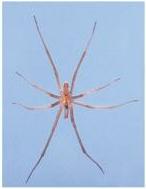
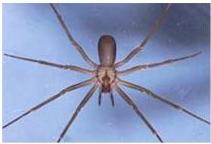
In a fluid and seemingly effortless motion which would have been more in place in a Hollywood special effects studio than in real life, Simon shifted from his chair, pivoted on one foot and sent his open palm rocketing towards Agarwal's face. At a millimeter from the fellow's nose, his hand arced up and deftly closed around something that had been crawling—unnoticed by anyone else in the room—atop the stocky man's head. If Indian gentleman's hair so much as moved, Tom was unable to tell it. Simon slowly brought his closed fist down to within a foot of the surface of the table and opened his hand. In the center of his palm and completely unharmed, was a small brown spider. Tom was pretty sure he recognized it as a brown recluse, one of the most dangerous spiders common to the DC area. It was possible that Simon had just saved the fellow some pain, if not his life. Tom wondered why Simon was handling it with such callous disregard for its venomous bite.
"Simon," Tom was trying to remain very calm. "You know what kind of spider that is, don't you?" Tom was not fond of spiders, in general, but he had a healthy respect for the brown recluse. He had seen some mean scars from their bite. The brown recluse venom simply kills all the tissue in the immediate area leaving a huge gaping crater in the flesh. It's nasty, painful and more than a little dangerous.
"Yes I do, Tom," Simon answered evenly. "Do you know what it is, Mister Agarwal?"
"I believe it's a male of the species Kukulcania hibernalis, commonly called the southern house spider. Not very venomous, but often mistaken for another, much more dangerous arachnid called a brown recluse." The stocky man had remained completely calm throughout the whole process, and seemed to be closely studying the spider that Simon had presented to him. The little bugger hadn't moved since Simon opened his hand. It almost looked like it was playing dead.
"It's a bit North for this fellow," Simon continued. "But he's not unheard of, around here."
Tom was greatly impressed with both Agarwal's aplomb and with his knowledge of the local fauna. . .until he remembered that the little Indian was in constant mental contact with a cohort of psychics who were presently reading Simon's mind. "Of course," he scolded himself. "These guys would know what Simon was thinking and had probably relayed the information while Simon was still formulating the sentence in his mind."
"Did I pass whatever test you had in mind, Doctor Litchfield?" Agarwal was now looking at Simon much as he had the spider, just before. "And I do hope that you don't plan on killing the poor fellow. I fear that Miss Eckelberry would be quite upset and after that magnificent repast, I feel a debt of gratitude towards her that merely settling our account for this evening could never repay."
Simon seemed to consider the other's words for a moment and then gently placed the spider on one of the surrounding rough wooden shelves. Tom flashed on a scene of Gillian, stoutly chasing little brown spiders into a paper bag so she could deposit them outside without harming them. He stifled a small chuckle until he remembered how much the thing had looked like a brown recluse. He wondered if Gillian knew the difference as well as Simon. If she were to mishandle the wrong small brown spider. . .
male southern house spider brown recluse
Kukulcania hibernalis
Loxosceles reclusa
Would you like us to make sure that she knows? It was the voice of a young woman sounding timid, unsure. For a moment Tom wasn't sure who had spoken.
We can make sure that someone mentions it to her. Or maybe she might just run across an article in a magazine that one of her customers leaves behind in a booth, or something. Tom realized that he was hearing the voice in his head. Someone in his control pod, presumably.
Or maybe not. I mean, she's been doing this for just years and years and she's never had a problem with it, or anything.
"Tom, what else did you notice that was strange?" It took him a moment to shift mental gears and realize that Simon had spoken to him. He was accustomed to following more than one conversation at once—a skill he had honed through years of couples therapy—but this was going to take some getting used to. With an effort he focused on what Simon was saying.
"Well," he began, "these men—and they are all men, I suppose you noticed—were all last seen in fairly public places like grocery stores, gas stations and in one case, a Home Depot. Those that walked away from their work places were all in the public areas of their buildings, like the cafeteria or in the main lobby, where public access wasn't restricted."
"That was good, I hadn't noticed that last part." Simon was scanning through the sorted dossiers and reports. "Did you notice anything about the men, themselves?"
Tom considered for a moment. He really hadn't had much time to spend looking at the fifteen dossiers, but he had spoken with Agarwal, earlier.
Age, what about their age? It was the psychic equivalent of a whisper, and Tom wondered if one of his control pod members was somehow communicating on some kind of private channel, outside the 'hearing' of the others. It had sounded like a woman, but different from the first. In a moment of stubborn pique, Tom decided not to use the hint he had been given, it felt like cheating, but it did make him think of something else.
"I noticed that none of these men are really the 'top' person in their field." Tom spoke slowly, voicing his thoughts without much time for analysis. "From their job titles as stated in the files, whether it was at a university, a government research lab or in a corporation, all them were some kind of associate professor, or research assistant, or even just programmer. There wasn't a Chief or a Head or even a Doctor of anything after their names. As a matter of fact, I don't remember seeing a PhD in the whole group."
"Wow," Simon looked thoughtful as he spoke. "I was just going for young, but you really nailed that one."
Tom felt almost ashamed, and reluctant to accept the praise that Simon had so generously offered. He refused become Christian de Neuvillette to some unseen psychic's Cyrano de Bergerac. He decided he was going to have a little. . .discussion. . .with his control pod when he got the chance.
"Anything else, Tom?" Simon asked.
"I noticed that they have more than simple youth, in common." This actually was one of the things he had noted and had intended upon discussing when the opportunity presented itself. "None of these men are critical within the hierarchy of their respective organizations."
"Critical?" Agarwal interrupted. "It would seem just the opposite, Doctor Weldon. These men were all important. They were the shapers and movers of whatever technology they were researching. Many of them had yet to achieve their proper status in their field, but all were considered critical by those with whom they worked. They were the up-and-comers, just paying their dues, as you Americans say."
"Again Mister Agarwal," Simon almost pounced upon the shorter man. He leapt from his chair so quickly that it almost toppled. He began pacing back and forth as he spoke. "How could you know this?" he snapped. "None of this is in the files, and even if the questions had been asked, how often would superiors admit that this young fellow was so important to the organization?" Each rotation of his pacing was bringing him closer and closer to the seated object of his tirade.
"And how is it that you were chosen to be the one representative of over a dozen different companies and government institutions—all of whom have apparently ponied-up a considerable sum? Enough, apparently, to make even Callow giddy with avarice? Why aren't we talking to someone from the Department of Energy about Worthington?, or Cal Tech about Cheng? or to Sony about Davidson?" By this time Simon was standing at Agarwal's side, one hand on the table before him and flourishing a handful of dossiers under the darker man's nose, his own face barely inches away.
"How could you know these things, Mister Agarwal," Simon demanded. "What are you, some kind of mind reader?"
And there it was. Out in the open and just like that. Simon had cut through Tom's and a coterie of psychics best efforts at a slow introduction to the whole concept.
Agarwal had no choice, as far as Tom could tell. "Yes, Doctor Litchfield, as a matter of fact, I am."
"You knew this, already, didn't you, Tom?" Simon asked.
"Doctor Weldon was no more easily fooled than you were, Doctor Litchfield, I assure you." Agarwal's body language told Tom all he needed to know. The man was immensely worried, walking a delicate line. . .and he knew it. "Doctor Weldon's introduction to our plight occurred some time in the past, and I can promise you that his cooperation is entirely of his own volition."
"As far as I can tell, Simon," Tom was being dead serious. "Nobody has been hurt by these folks, so far. I'm not saying I'm crazy about working with people who can read our minds, but I don't see what we can do about it. According to Mister Agarwal, here, they've not only been watching us, but all the other agencies, think tanks, Congress, the President and most of the major corporations, too."
"Must keep you pretty busy," Simon said to Agarwal.
"How did you know?" The little man seemed honestly perplexed. "My people tell me that they were as surprised by your question as I was."
"It was the lobster bisque," Simon said. "From my first bite I could tell that. . .I wasn't the only one enjoying it." Absently, he scratched the back of his head. Tom suspected that something was going on, but he couldn't quite decide what to do about it.
"Funny, some of them are trying to keep me from telling you something, Mister Agarwal." Simon was visibly concentrating on something. "But there seems to be some kind of. . .argument going on. Apparently, you have quite a number of people sitting in on my. . .uh. . .pod?. . .a record number, from some of the comments I'm hearing."
"You can hear them?" Agarwal seemed angry.
"That's what they didn't want me to tell you. Some of them, anyway." Simon looked almost amused as he spoke. "Somebody named. . .Bernardo. . .is very upset that you've found out." He'd had to strain a little for the name, but Tom could tell that Simon was taking advantage of whatever discontent had been brewing.
"Now Saïrem," Simon spoke in a very conversational tone, "Are you going to let her talk to you like that? A woman should know her place, and if she does not, is it not up to the man to show her where it is?"
Tom noticed that Agarwal was straining, fresh sweat had broken out on his face and he seemed to be whispering to himself. He decided to help Simon out, if he could. He directed his thoughts inward, toward that little itch at the back of his mind.
"You people aren't any better at working together than we are, are you?" Tom spoke aloud, but low. His statement could have been directed at Agarwal.
It only took about a second before he felt. . .turbulence. . .in the link between himself and his controllers. Faintly at first, but gaining strength like the murmurs of an approaching crowd, he began to hear the voices. He wondered how long Simon had been dealing with them without letting on. But Simon had to sort through many more than the five in Tom's control pod.
He's doing this on purpose, you know. It was a man's voice, cultured, urbane, perhaps from the Old South.
But he's right and you know it! This one—a girl's voice, maybe the same he'd heard before—was. . .spoken?. . .with surprising venom.
Oh, Right Kara, like you're not just trying to get him to show you his thingy! Maybe get him to touch it while you're still in his mind like you did with that policeman, yesterday. This 'voice' was a little screechy, Tom guessed it to be a post-adolescent male, maybe in his early twenties. The image of thick glasses, greasy hair, and acne scars came to mind, but he wasn't sure from where.
He's listening! Hey! He can hear us! Dammit people we're bleeding over as much as the Morocco pod! And Rodney will you just shut up and leave Kara alone? Please? You know what she's been through. Tom realized that this was the voice he'd heard earlier when he worried that Gillian might encounter the wrong kind of spider in her back room.
Oh, all of a sudden you're worried about him hearing us, huh? Well what about your little secret messages to him trying to impress him with how much you care about his fat old girlfriend. Do you think we're stupid? I bet you want him to show you his thingy, too! So screechy-voice was named Rodney, Tom mused.
You didn't talk so big when Bobby was in charge.
Bobby wasn't trying to see his Thingy!
Rodney, listen carefully, it was Old South's voice, but it was cold, almost inflectionless. Miss Eckleberry is a lady in every sense, and you will refer to her with respect. Tom felt an instant liking for this Southern Gentleman.
And Rodney, if you don't stop using that puerile word, I'm going to make you cut yours off with dull scissors. Do you understand me? Tom shuddered, his opinion of the fellow changing in an instant. Along with the voice there was a feeling of dead certainty. This was no bluff.
Pasteel would never let you. . .
Pasteel isn't a surgeon, Rodney. He doesn't know how to sew it back on for you. And have you seen what the Cayman hospital system is like? They might just put it on backwards. As for Pasteel, what's he going to do, shield me to death?
Now calm down every. . .
You make me do anything, old man, and I'll make sure everything you eat tastes like shit for the rest of your life! There was fear mixed with this message. Tom's experience with such young men was extensive. This kid was way out of his league with the one he had been calling Old South.
Dull scissors can also be plunged into eyes, Rodney. And you know quite well that I will do it.
No you won't, Johnathan. All of you, take a break. I want all of you to get some rest, give each other a hug, and start fresh in the morning. It has been a very trying day for all of you, and I appreciate your efforts.
It was Agarwal's voice, but it was different, somehow. It was more clear than any spoken voice he'd ever heard, and there were emotions coming through to punctuate certain words or phrases. Sadness, sorrow, love, embarrassment, fatigue, disappointment. . . Tom lacked the vocabulary to fully express the differences between what he was receiving and what he was used to gleaning from the words of others. Mutes, Agarwal had called the 'rest' of humanity. Tom felt he may have just had a glimpse of what the man had been trying to tell him.
Regular duties, tomorrow. I will not be needing any more pods for this part of the endeavor. Again, thank you all for your efforts. You are all very dear to me. Miss Kara, I will give you a call, later. Please be prepared to receive it.
Tom realized that he was hearing it all over his link with his control pod. Because he was watching the man, he could see his lips move along with the words, but what he heard in his mind was just slightly delayed, like a bad movie on late-night television. The stout man's body language intimated nothing but defeat, with perhaps some resignation to accept the situation no matter what the outcome. Withdraw everybody, I'm going to stop shielding the links, now. Goodnight.
Suddenly, Tom was alone with his thoughts again. But not quite. He could still feel a. . .connection. . .and with a little concentration, he could tell that there was nobody on the other end. It surprised him how much he missed the richness, the fullness, and the intimacy of the link with the pod. With an effort, he banished this feeling to whatever corner of his mind he saved for feelings he did not want to explore, and began to consider what had just happened. The entire exchange had taken less than a minute. There had been other voices in the mix, urging calm, expressing anger or doubt, but the experience had been not unlike riding a school bus with several chattering children. He could track only so many conversations at once.
He knew that Simon had been speaking out loud to his pod during those moments, but he had been completely unable to follow what had been said. He had the impression that Simon had been egging the situation on in much the same manner, though he was dealing with three times the number of opponents. Tom wondered if that had made it more difficult for Simon, or easier. Sowing discontent in this group had been like shooting fish in a barrel. What a maladjusted bunch this was.
"Doctor Litchfield," Agarwal's every word was etched with weariness. "I believe I have just witnessed a most fascinating and enlightening lesson in mental Aikido." His courteous bow to Simon was very subtle, very Asian.
"Apparently, my Tae Kwon Do approach wasn't so successful," Simon answered, with an odd grin. "Though they didn't seem very anxious to repeat the experience."
"You know about that, too?" Agarwal's resignation was complete. "I suppose I should have anticipated that there would be considerable. . .backchatter. . .in a pod so large. May I ask what else you've learned?"
"Can't you just read my mind?" Simon answered. Tom had been wondering the same thing.
"I can, Doctor Litchfield," he answered. "But right now I am not doing so, and I give you my word that I am an neither of your minds. The process is. . .complicated."
"From what I heard with the five controlling me," Tom ventured. "Your great strength is your mental shield."
Agarwal shook his head in amazement. "You are both formidable men." He paused, considering his words. "And I apologize to your both for mishandling my approach to you. I had hoped that we would have time to speak at great length before I broached the subject of the Collective, at all. By that time, I prayed that you would both agree to help us to find my. . .our. . .lost child."
"I assume you're talking about the boy." Simon said. "And if you think I intimidated your little pod; you should know that they are absolutely terrified of what he might be up to."
"He has had more trouble than most. . .adjusting. . .to the ways of the Collective." Agarwal's feelings were not difficult for Tom to read. He had seen it before from the parents of children who had gotten themselves into some kind of trouble. He was worried, a little defensive and at a loss as to the best way to try to make things right.
"And what ways are those, precisely." Simon asked.
"First of all, Doctor Litchfield. You must believe me when I say that we really do not like to meddle in your affairs."
"Ours, as in Nightwatch?"
"Ours as in all of humanity, Simon." Tom answered. "I don't think they really care what we do to each other as long as it doesn't harm them. Isn't that the gist of it?"
"Indeed," Agarwal answered. "It is more than just distasteful for us, Doctor Weldon, we find the experience quite painful. Your minds are chaotic, undisciplined and very often ravaged by feelings and emotions and thoughts which only those who believe their thoughts to be completely private would feel free to indulge in."
"My experience with your control pod leads me to wonder if your people are any better, Mister Agarwal," Simon stated.
"Our early lives are quite difficult, Doctor Litchfield. Perhaps Doctor Weldon has some concept of what it would be like to be bombarded by stray thoughts from everyone around you from before you were even born."
Tom felt a chill as the implications of the man's words began to sink in.
"Imagine reading your mother's thoughts as she rocked you to sleep. Her worries about the financial burden of this bundle of joy, her lingering pain from the birth, how if it weren't for this crying baby, she would be able to catch-up on the sleep she so desperately needs."
"Imagine, Doctor Litchfield, how even a good father must muse—and only to himself—that if this child had not been born, how different things would be. How he really wanted a girl, this time. . .or a son. These would be things that he may never admit to anyone and which do not reflect how he truly feels, but they are thoughts in his head, nonetheless."
"Imagine now what the other siblings in the house may be thinking about the new baby." Agarwal paused to allow the others to consider.
"And know that with very few exceptions, when those of my kind are born, they cannot transmit their thoughts at all; they are merely receivers. We do not have any way of knowing that they are one of us until after the first year, or so, of life. At about the time they learn to talk, their minds have developed to the point where they can also send."
"And that's when you come and take them?" Simon asked.
"That's when we first begin to talk to them, Doctor Litchfield. But finding them is more difficult than you might imagine. It's not a radio signal; we have no way of homing in on them or determining where they are, except for whatever clues may be in the child's mind, at the time. And at the same time our children learn to speak, most of us also learn to shield our thoughts from others. For you see, the shield works both ways. It is also the only way to not read the minds of everyone around you. Our window of opportunity is very short, in such cases."
"And then you come and take them," Tom repeated Simon's earlier question.
"We save them, Doctor Weldon. We save as many as we can and as early as we can. We also save their families from them." Agarwal delivered this last with some vehemence.
"’It's a Good Life,’" Simon said. Tom and Agarwal both looked at him like he was speaking gobbledygook. "Old episode of the Twilight Zone with Bill Mumy as this kid with extraordinary powers who terrorizes a whole town."
"Precisely, Doctor Litchfield." Agarwal couldn't hide a small grin. "I find it fascinating how often many of you seem to have considered some of the implications of our plight, considering how few of you know anything about us. And very often, we find them too late."
"Children are generally selfish little tyrants," Tom said. "What if your kid didn't have to take no, for an answer?"
"Sometimes," Agarwal's grin was gone, now, "the family is little but a collection of trained puppets by the time we can intervene." His words were solemn, serious. "And other times, depending on more variables than I can list, we find only a dead child, surrounded by dead parents, dead brothers, dead sisters. Every situation is unique, there are no constants."
"It's surprising any of you survive," Tom said, his mind in clinical mode. "And I imagine that those that do would suffer a wide variety of guilt complexes, depending on how. . . ."
"We spend a considerable amount of time and effort trying to undo the damage that one of ours has caused." Agarwal interrupted him, defensive. "We are not monsters, Doctor Weldon. We are people, just like you, and I assure you that it is we who suffer far more from our experiences with you than any of you suffer from us."
"How long does it usually take," Simon asked, "before you manage to locate and save one of your own from us?" His voice held no malice, but he was obviously doing some mental calculation. Tom was impressed once again by Simon's ability to cut to the very center of the problem.
"Five to six years," Agarwal's answer was immediate. "By this time the child has learned enough about his whereabouts to direct one of our teams to him. And to answer your next question, Doctor Litchfield, one in ten."
"One in ten?" Tom wasn't quite sure what the little man had meant.
"They lose contact with 90% of their children and—presumably—never find out just what happened." Simon's answer was deadpan, almost clinical. Tom had seen Simon handle himself this way when the emotional ramifications of what he was speaking about were just too intense to deal with. "Do any of them ever surface, later?"
"A few," Agarwal answered. "A very few of us manage to survive by shutting out our abilities completely, and by trying to learn to get along with people in the normal way."
"But the damage has been done, by then. Hasn't it?" Tom was beginning to understand. "I feel almost guilty about turning my control pod against itself, the way I did."
"I thought it was too easy," Simon answered. "I suspected that you purposely allowed me to do it, but I am beginning to understand why your Collective may not be quite the threat you could be."
"I have tried to tell you both that we mean you no harm at all," Agarwal began. "And that it is, by far, in our best interests to make sure that your societies, your technology, and your economies operate at a level to allow us to find as many of our children as we can."
"Okay," Simon had come to a decision. "So tell me what I need to know about this boy."
# The Past #
The Boy was tired. He hadn't felt this level of fatigue since the time he had tried to subvert the minds of the leaders of one of the street gangs—they called themselves The Jaguars—that was moving into his area. He had failed. His approach had lacked the finesse he would later learn. He did not yet know how to use his whiskers to gently nudge people in the direction he wanted them to go. He had had some success against the death squads by simply taking over one mind and causing that one to turn his gun against the other members. The entire operation took only moments and then he would pull out, before the survivors gunned-down the dazed, confused assailant. But this street gang was lead by four equally intelligent young men, and his attempt to make them plan and execute a crime that was sure to get them caught, simply didn't work. It was just too much to hold onto at once, and he was learning that after repeated attempts, they could all sense that he was there.
It seemed that once they were aware of his presence in their minds, they would fight the impulses that he was trying to implant. Not only this, they eventually learned to tell when one of the others was acting strangely and take steps to restrain their fellow leader until the fit, had passed. Of course, they never quite figured out that it was The Boy who was doing this.
The voodoo of Brazil is rife with gods who can take possession of a person and make them do things. On the Streets, whenever the incessant pressure caused by violence, poverty, drugs and despair, overcome a person and they snap, there are whispers that the true cause was spirit possession. Of course, these young Jaguars did not believe such things. But the Jaguar is a powerful spirit in Macumba mythology and, privately, each of them wondered if, perhaps, they should have chosen another name for their new gang. Individually, and largely without telling the others, they spent a considerable amount of money and effort procuring wards and trying to appease whatever Candomblé god they had angered.
These common Macumba beliefs fit well with what The Boy was doing, and, eventually, he just gave up his attempt to make them do his bidding. If there were such things as spirits, they were far more powerful than he. When all four were found dead by their lieutenants, inside their locked basement headquarters, there were deadly arguments by some as to whether they had crossed the wrong shaman, or had simply gotten ahold of some bad hashish. The Boy had learned a valuable lesson; it was far easier to kill your enemy, than to try and control him. Mind control is hard, and only works for a short while.
Taking the eighteen men on the list he had been given had been much easier. He needed only to hold them long enough to walk them outside and into the waiting van. The nearly silent men who put the needles to the necks of the abductees knew nothing. They were professionals who had been hired blindly and who would do anything for the right price. Some of them silently speculated that they were taking these men for their organs, probably because they were a perfect match for some billionaire or his family. The orders were strict that no physical harm to any of their victims would be tolerated. None who transported their sedated prey cared, one way or the other. The Boy had known men like these his whole life. And because he also knew their thoughts, he trusted them.
But those whom he had contacted in order to build this device were a different matter. Before that accursed comet was blasted from the sky, the Collective had decided to make sure that none of the global criminal organizations would in any way interfere with the Herculean effort that was undertaken. With so much money—trillions of US dollars from literally every country in the world—being allocated and spent, it was expected that some of it, at least, would have been siphoned into the coffers of the organizations which run every major port in the world, every trucking company and every union anywhere. Interpol, among others, frankly marveled that such organizations as the Tong, the Mafia, the Russian Mob, and numerous others had been strangely helpful toward this common goal. But those in the Collective knew well that these organizations were all run by a single individual. If only one mind is. . .nudged. . .into issuing orders that for the duration of this emergency, normal business practices were to be suspended for anything that related to what was being called, The Effort, then the troops would all take heed. Of course, a few enterprising criminals tried to hide a little larceny from their bosses, but when the Collective is checking in on you from time to time, it's not surprising that those who broke the new rules were invariably found out. Some of the punishments to noncompliant underlings dealt during this time, were the stuff of legends.
And it's not like their businesses suffered. With the eyes of the world governments on outer space, border security became lax. Smuggling records were set, broken, and set again before things began to normalize with the return of the fleet. The Collective did nothing to either support or to hinder these enterprises—as long as they didn't interfere with The Effort. And afterwards, well. . .there was plenty of leftover equipment, fabrication facilities and warehouses for the criminals to fight over.
It was on one such mission that The Boy read the mind of a certain individual, a member of a certain Royal Family and the Minister of Trade for a certain wealthy country. Unbeknownst to even his closest official allies, this man was also the brains behind one of the most successful, low key, and continent-spanning slavery rings the world will ever know. This mind—which was almost unnaturally sharp—held the seeds of an idea that would take root in The Boy's imagination and, eventually, lead to a very strange message on Tom Weldon's answering machine. This trafficker in human beings, be they indentured laborers in Dubai or the Chinese girls who are forced to work in every "Asian Spa" that can be found along every American Interstate, was by any definition, a slaver.
And he was proud to be a slaver. He saw himself as continuing a time-honored tradition in his family that had gone back for generations. There was a time when the Arab slave trade was a robust and honorable endeavor. They were true middle men, those slavers. They never actually captured the slaves, themselves. The traders would simply buy the captives from tribal leaders throughout the continent. Some of the slaves were that leader's own subjects but mostly the. . .stock. . .came from raids on neighboring tribes. It was a practice that had fallen into disrepute in the past decades, and the humongous revenues generated by oil had made it no longer financially necessary and only a few in the family had continued to dabble in it, over the years.
But this modern slaver had a dream. It was a fantasy, really. He dreamt of finding a way to make slaves. You see, he liked owning others. He enjoyed having absolute power over other human beings and when he was forced to deal with those with the ability to not only refuse him, but to actually oppose his will, he chafed.
The Boy had been assigned to make 'contact' with this Minister of Trade just to make sure that he was doing all he could to help The Effort. All he needed was to get close enough to the man so that when he scanned all the minds in the room, he could pick him out. Once he had done so, he could establish a link with him that would allow him to always find him, always tap-in. It was almost like there was an old-fashioned switchboard in his mind. Once the connection was made, there was always a slot where he could plug himself in and either just passively read the other's mind, implant a thought, or if in dire need, take the other mind over, entirely.
When he perused this Trade Minister's mind, however, he was stunned. He understood in seconds that the man was fully aware of the comet and the consequences of interference with The Effort. He had done nothing, and would do nothing to jeopardize his true enterprise, the trade in human flesh. He was even redirecting some of his trade to labor-poor areas where hands and bodies were needed to build some of the massive craft, launch pads and relay stations that were desperately needed by The Effort. Girls from the Philippines that had been slated for sex work in Canada, wound up in Mexico assembling the thousands of tiny gears and motors which kept The Fleet operating. The slaver's profits were diminished during this time, but not by much.
The Boy reported that all was well with The Minister, and stored the information in a part of his mind where he kept his secrets. This was one of the tricks he was learning during his time with the Collective. Everybody had their little area where they stored secrets, and these places were respected by all. And he'd learned other tricks, too. He was beginning to understand that as powerful as the Collective was, it was also weak-willed, indecisive and highly fractioned.
He was grateful for all they had done for him, for the education and the clean clothes and the food, more food than he had ever imagined and there was never a limit. He'd made himself sick more than once when he had first arrived at one of the Collective's safe houses. He'd had to learn to limit himself, for there would be more available later, when he was hungry again. Sometimes he still hummed the tune of a prayer that the street children used to sing.
It was soon after The Boy had been saved that they all heard about the Comet. It had returned. And The Boy also learned that the Collective had acted once before to save the world from disaster. He learned that before the last Century, they had recruited a cadre of human geniuses to build and fire a weapon from a steamship in the North Atlantic. The leader of this group was named Nikola Tesla, an incredibly healthy man who nonetheless, experienced several inexplicable and temporarily debilitating illnesses. In his memory, he was bedridden for months at a time but the Collective knew that he had actually been working on the design and construction of a device, the likes of which the world had never seen. The weapon had fired for four straight days and in the end, it had changed the course of the comet enough so that most of it had missed the Earth. And when it was all over, they caused him to forget his greatest accomplishment.
The Boy was proud of what the Collective had accomplished back in the early part of the Twentieth Century. He marveled that they had labored for over forty years to recruit, train, and outfit the best minds in the human world and had kept the whole thing a secret. Too young and inexperienced for some of the early missions in support of The Effort, The Boy tried-out one of his newfound tricks—reading—in the archives. Perhaps there he would find something that could help.
The archives of the Collective were extensive, and they reached back farther in time than The Boy could believe. So when he found an out-of-place document in what should have been the records from the time of Cristóbal Colón, who had a member of the Collective on his crew—which is the only reason they didn't mutiny—he read it, avidly. It was the first time he heard of an enigmatic figure that appeared throughout the Collective's history. It was the first time he heard of Gray.
Gray had spoken to the Collective of that era—to all of them, in their minds—and told them about the comet that was even then speeding on a collision course with Earth. The year had been 1860, but Gray had been speaking to the Collective every few centuries. He had warned of plagues, volcanoes, and wars. Sometimes the Collective could help, and sometimes they could not. But they always tried. From what The Boy read, The Collective of those bygone days had been peopled by men and women of backbone, of courage, and of compassion. During the six years that he worked toward The Effort, he began to understand that the Collective had lost its will to do anything but to find all the little gifted children that were born, and save them. But what good did it do to save them from the world, if the world could be destroyed from beneath them?
When The Boy felt that he could no longer tolerate the absolute refusal of the Collective to take any steps to strengthen their hold on the leaders of this fragile world. When his impassioned arguments for more control fell on deaf ears, and his proposal as to how the Collective could use human technology to augment their powers was laughed away, he decided to do something about it, himself. Borrowing from the lesson of the first defeat of the Comet, he cast about for someone with the wealth, the desire, and the will to help him. And he remembered what he had seen in the mind of the Minister of Trade. He knew all he needed to know about this man and could find him anywhere in the world, since he'd been in the man's mind before. But still, he chose to make his first contact by human email. The fellow had several accounts that were known to only a very few, and these he guarded quite zealously with some of the best filters known, but when the title of an email lists a supposedly secret, though relatively small, Zurich account number and password. . .it is not something to be ignored.
And when they finally met, The Boy impressed the slaver even more. He knew things that he could not possibly know. And even as he began to doubt his own sanity for believing what this angry child was proposing, his mind wandered back to his fantasies of power. Even as this dark-skinned half breed of African slaves and simple natives spoke, he dreamt of his father, the Prince, himself, kneeling at his feet in abject subjugation. In his mind, he savored the feeling of never again having to fear that grey-bearded tyrant's wrath. And he also knew that he had the wealth, the connections and most importantly, the need to make this happen. How could he refuse? And he trusted this boy. He trusted that whatever the boy proposed, he had his own plans for this device. But the slaver did not care. The boy could do what he like as long as he got his chance to use it and see those who sought to dominate him, thwart him or even those who dared to express their opposition to him, humiliate themselves in their scramble to pay him homage.
The Boy, for his part, also trusted the slaver. He trusted this Royal to betray him, in the end. He had known men like this his whole life, and he trusted himself to be able to detect and to thwart any attempt at subterfuge. For humans who deal with even an ordinary member of the Collective, there is no such thing as privacy. They are always watching.
So the boy and some hired minions had snatched these eighteen men from their lives and spirited them away to this underground warren which dated back to the first resistance fighters to ever go against the Germans. But these were not the civilized, mild-mannered Germans of the twentieth century. These Germans were the Visigoths, who overran the Roman Empire. When Rome fell, there were many enclaves at the feet of the Italian Alps which held on for decade after decade against the—admittedly—disinterested barbarians. They generally left these poor remnants of old Rome alone, for there were so many easier targets for their pillaging and rape. The natural caves that The Boy and his 'research team' now occupied had been vast storehouses for these holdouts. And as the centuries passed and the countryside settled, the archetype that had started as forward-thinking Roman senators and their servants, set the template for feudal lords and their serfs.
The work was progressing, but The Boy was tired. And though he still got messages from his financier, the slaver, he hadn't been able to contact him, lately. And there are only three ways that this could happen. Perhaps the man had developed his own weak shield—which had been known to happen to those who had been exposed to long-term contact with the Collective. The Boy hoped that this was the case. It was something the fellow might not even know about. He made several email requests to once again meet the Minister but all of these were rebuffed. The Minister of Trade, was a busy man.
The other possibility would be that he was being shielded by someone in the Collective, which was possible, but unlikely. The Boy had taken himself out of the loop, so to speak, but he still knew that they had been calling for him almost continuously since he had gone off on his own. And besides, if they were shielding the slaver, then they knew his plans and his location. They would have taken steps to stop him, by now. The last possibility, however, was the most chilling. Perhaps the man was dead. But if this were the case, who was sending him messages using his private email accounts? And who was paying the bills? The Boy had not established links with anyone who knew the Minister, personally. And nobody he had linked with had any reason to contact the man. The Boy was worried, but the device was almost ready for testing and, tired or not, the extra power it would give him would let him punch through almost any shielding at any distance. He would wait until then.
# The Present #
"Dammit dammit dammit!" Stephanie Keel was usually much better at expressing herself, but this time it looked like whatever had interfered with her efforts was more infuriating than the last. To Tom, it seemed she had used-up her more colorful invectives on the several times she had been thwarted by a hacker who wasn't any better than she, but had the advantage of a head start.
"Another dead end?" he ventured.
"Another data file has been corrupted," she spat. "You would think that United Airlines would have better ICE than that."
"Ice?" Tom asked.
"I. C. E.," she pronounced the letters one by one. "It's an old-style term for computer security, it stands for Integrated Cryptographic Engine. We don't use the term much, anymore, but when I get mad sometimes I slip into old habits."
Tom felt the tickle in the back of his head that meant that Agarwal had just joined the conversation. Apparently, whoever they had 'watching' Tom when the little Hindu was off doing psychic stuff, had passed the torch to his boss. Tom was beginning to get a feel for who was watching him at any given moment. He had vague impressions of an older man, a teenage boy, two women and one very old and very judgmental woman. Generally, it was only Agarwal who actually communicated with him. But there was always someone there. He had no idea what they did when he was asleep. There was a slight flurry of activity from that spot in the back of his mind, which Tom guessed meant that the psychic was 'reviewing' his surface thoughts.
"So what happened with the United database?" Tom might as well save Pasteel some time. All he really knew was that Stephanie had run into some kind of problem. Again.
"I thought I had it," she was still typing madly, trying another approach. Tom had never seen anyone multitask like Stephanie when she was up against a challenge. "After I found that their primary was trashed, I hacked their back-up cargo manifest database in the hope that whoever got there first had overlooked it. I should have known better. This gal is good."
"Gal?" Tom asked. "How do you know it's a woman?"
"I don't," she was grinning. "But you wouldn't expect me to call this unknown person a guy, would you? Not when they're this good."
Tom chuckled. Stephanie was still Stephanie. The Collective couldn't—or wouldn't—touch her. Tom was convinced that it was only after Agarwal had explained why this was so, that Simon had agreed to help. Tom had a feeling that Simon's major concern that night in the back room of the Canon Moon Café, was for Stephanie's safety. Somehow, he instinctively understood the implications should she ever find out that there were people out there who could read her mind. So before Simon or Tom could say anything, Agarwal had insisted that someone other than Stephanie should be handling the technical aspects of this job. There were several able programmers working for Nightwatch who were more than qualified to track these people and materiel down under normal circumstances.
But then they'd run into problems. Somebody else had gotten there first. Somewhere between three and five days before that night in the Canon Moon, computer data from disparate areas was hacked, copied, and trashed. They had wasted nearly an entire day before Agarwal—and Simon—agreed to let Stephanie loose on the problem. Nobody else had any hope of out thinking and out hacking whoever this was.
For Stephanie, it was a straightforward op. Somebody had gathered—there was no real evidence of a kidnapping—eighteen technical minds and was building a device. Stephanie was a pro, and if she couldn't be let in on whatever the Big Secret was, she could at least try to figure out where some of the equipment was headed for.
"You know," she said, thoughtfully, "maybe this gal is just too good for her own good." At this she started typing madly; her dark hair had been tied in a tight ponytail earlier, but a strand had worked loose and was dangling over her forehead. Tom had noticed her absently flicking it out of the way several times, but now it was jouncing in front of her eyes in what must be an awfully annoying dance. But she didn't seem to notice. She had been working on this problem for almost eight hours but she still looked freshly showered and rested. Very slowly, a smile crept into her countenance.
In Tom's opinion, when Stephanie Keel smiled, she was one of the most attractive women he had ever seen. She had a bright and sunny smile which instantly subtracted decades from her apparent age. When that smile lit her face, she was a bright young teenager out with friends and enjoying life with all the gusto and hope that could be crammed into every moment. But this was not that smile. This smile was different, chilling. This was the smile of the spider when the fly was well and truly tangled in her web. This was the smile of the leopard when the infant gazelle staggers to its feet only a meter from the cat's lair. This was the smile that reminded Tom that Stephanie Keel was a deadly opponent, no matter what arena she was in.
"I got you, you son of a bitch." The cat had pounced upon the gazelle. It was all over but the thrashing and the blood.
"Now it's a man? You've got his address and shoe size, too, I suppose."
With a dramatic pause, her finger hovered over the ENTER key. As she spoke, she stabbed it downward. "No, I'm still guessing, but since it was this easy, it's probably a guy."
As the data began to compile on two of the six screens at Stephanie's workstation—how she could track so much information still boggled Tom's mind—he felt that tickle in the back of his head, again, and got the idea to walk around and look at the screens. It was obviously a planted message from Agarwal. Tom was getting used to these nonverbal communiqués, but he didn't think he'd ever learn to like them. On one of the large screens was a stylized, two dimensional world map. It was just a big square with every country more-or-less pasted in place, no curvature was represented, at all. Tiny dots were appearing in different locations and in different colors and little dotted lines were making their way to some other destination.
"You see," Stephanie began. She had picked up her coke and had just taken a big swig. She had to pause as a tiny burp escaped her efforts to stifle it. Her face blushed, slightly, a winsome grin creeping in. Tom thought this might just be more attractive than her smile. A blush from Stephanie was even more rare. "I'm sorry, Tom, I just get excited when I crack something like this."
"Go ahead, Stephanie," Tom was smiling, too. "I might have seen people do worse things than that lousy excuse for a belch, a time or two."
"Thanks Tom. Well, you know I've been hacking systems all day trying to find out where certain kinds of equipment have been shipped since those guys all disappeared. Have you noticed that they were all men, and all fairly young?"
Tom nodded, and gestured for her to continue. He could tell through the link that Agarwal was a little annoyed. He found that he didn't care a twit how annoyed the little man was. Whatever Stephanie had just done for them was probably absolutely brilliant, and the chubby little psychic could just wait for it.
"Well anyway, every time I got close to something I would find that someone else had hacked it and corrupted the file. I'm not sure what they used, but whatever it is, the only way to recover this data would be for me to take the individual hard drives and try and tease a few little packets out of each one. This isn't something that can be done from a remote station and from what you've said, somebody else is looking for these guys, too. Somebody good."
"But with the Cargo manifests at United, I noticed that it was only on certain flights were the data was trashed. Not on all of them. I found the same thing with trucking companies, and train lines and even with several courier services. And since we're really only looking for a destination, I decided to simply track every shipment where I found the data missing." She paused for another sip. "I've got spiders out crawling the web for any file that has been trashed like this in the last week, or so. I'm getting hits on all the major airlines, FedEx, UPS, DHL, and scores of little mom-and-pop delivery companies."
"Amazing." It took Tom a moment to realize that though it was his voice and his sentiment, it wasn't he who spoke. Agarwal had spoken through him.
"Lets face it, this stuff was leaving warehouses, which means it must have been shipped locally first, then it hit the long haul and then it had to be unloaded and taken to its destination by another local hauler." Stephanie didn't seem to notice any difference in Tom's voice, but perhaps she was simply engrossed in her displays.
Pasteel, don't do that. Tom subvocalized through the link. That really creeps me out.
My most sincere apologies, Doctor Weldon. The voice was clear in his head, and accompanied by a virtual cornucopia of rich, real emotions which Tom's mind tried to name. There was regret, remorse, embarrassment, chagrin, and something along the lines of shame, though weaker. I fear that my fatigue and. . .a certain distraction has lead me to make a most unpleasant error. And I truly beg your pardon.
Well it looks like this is going to take a while, why don't you get some rest? Tom had no idea what kind of social taboo had just been broken, perhaps the equivalent of showing up for church in a bikini, perhaps worse. Why don't you check back in with me in an hour?
Do you happen to know Doctor Litchfield's location? Agarwal's mental voice seemed strained, detached. He was on an errand in one of the lower levels of the building, and we seem to have lost contact with him. His watcher was new, and we occasionally lose our focus until we have firmly established a link.
Lost contact? Tom sent back. I thought you guys had us covered.
>From what I understand, it was very strange. Agarwal answered. He just blinked-out, we've had several short moments of contact over the last hour or so, but it was barely enough time to realize that the link was back before it disappeared, again. We've never seen anything quite like this.
Wouldn't you know if. . .Tom was interrupted by the IM tone on Stephanie's computer. She had been sending and receiving these all day. On this workstation, only sources users inside the Nightwatch complex could send or receive an Instant Message. But what got his—and Agarwal's—attention, was that the message was from Simon.
Stephanie, rather absently, typed a quick affirmative. She was still watching the march of the data on her screen. Something was certainly taking shape.
Tom felt a definite prodding from Agarwal. And he didn't like it. Somehow, they had lost contact with Simon and they were very worried about it. Under other circumstances, he may have been a little worried, too. But Simon's Instant Message to Stephanie was normalcy, itself. It was taking far longer than they expected for Stephanie to pin down the location of the research facility. Simon, being Simon, had become a little fidgety and begun gathering some special equipment for the mission—Tom didn't know quite what—and had been scurrying around the Nightwatch campus for most of the day.
I'm going Pasteel, I'm going. Tom was more than a little annoyed with the little man's micromanagement. He wasn't somebody who needed constant supervision. He said goodbye to Stephanie and started making his way down to the popular culture section of the Nightwatch library. It was the chosen meeting place for the operatives from the covert side of the Institute, probably because this collection of tabloids, celebrity mags and scandal sheets was just too common for the urbane, educated and cerebral bunch who populated this building. But Tom also suspected that the area had a reputation with the troops as a place it would be best to avoid. . .don't ask why.
Do please hurry. The words were uncharacteristically terse. But the richness of the communication made it difficult for Tom to complain. Along with the 'verbal' aspect, came a true and sincere dollop of worry, specifically directed at Simon. Tom was getting better at interpreting Agarwal's mental vocabulary and realized that there was another subcontext to the worry. On a whim, and without planning it, Tom moved his conscious mind through the link, looking for that stray thought from Agarwal concerning Simon.
Doctor Weldon. . .Tom. . .Please don't do that. With a snap that nearly toppled him, Tom was thrown out of Agarwal's mind. His knees became momentarily weak, and he had to pause in his rapid walk towards the Library to steady himself against the institutionally taupe wall of the hallway. This part of the maze, which was the business end of Nightwatch, and where Stephanie worked, could have been any modern office building. There was the ubiquitous smell of brewing coffee, name plates on the doors, and low murmurs of voices, clicking keyboards, and overloud phone conversations. As Tom stood there, hand against the wall, he found himself staring at a small, orange, stuffed cat with suction cups where its paws should be. It was plastered to a Plexiglas window on some office door as if looking out at the world, curiously. Tom felt like a child who had just been caught reaching for the cookie jar and had had his hand slapped away by an adult. To continue the metaphor, it seemed the adult had also yanked the cookie jar from the counter and moved it to the top shelf of the panty. And just like the stuffed cat stuck on the window, the barrier was absolute. He knew he had no chance whatsoever of getting another shot at that cookie jar.
But he hadn't come back empty handed. For a heartbeat, he had been inside Agarwal's thoughts. The man had too many things going on in his head, and Tom only had the barest of glimpses, but he had found something that chilled him. Simon could not possibly be out of contact with Agarwal. The little man's link with Simon was too strong for that unless one of three possibilities had occurred. The first was that Simon was dead, which thankfully, Agarwal doubted. The second possibility was that Simon had somehow learned to shield himself—which was surprising to Tom but apparently possible. And there was a third, overriding, concern in the psychic's little mental cookie jar. Agarwal was afraid that Simon was being shielded by another psychic. If that was the case, the boy might just be onto them, which was bad enough. But Tom knew for certain that Agarwal suspected that some other member of the Collective—perhaps from another faction—was interfering and for some reason, that was somehow the worst possibility imaginable.
Tom's momentary disorientation had passed and he quickened his pace toward the library. You should have told us, Agarwal. He didn't try to hide his anger; he wanted it to come through loud and clear. If another psychic had control of Simon's mind, he had a feeling that somebody was in for a very rough ride. Little trouble in paradise, eh?
You should not have done that, Doctor Weldon. It was only possible at all because I am very tired, quite distracted—as you now know—and because I very simply wasn't expecting it. This kind of thing just isn't done! Tom had to smile at the righteous indignation that accompanied that last line. Tom could also sense the shame and chagrin that had preceded it. It was very difficult to lie over the link.
You know what, Pasteel? I truly do apologize. Tom was approaching the library, now. I was way out of line, for a while. He could tell that Agarwal had already parsed where this was going but he felt he had to finish the thought, anyway. For a short time, I forgot that we are NOT partners in this mission. I'm afraid that I made the mistake of considering myself, somehow your equal. It is clear that while it is perfectly acceptable for you to scan through my thoughts like they were the Sunday comics, the obverse is not true. I'm just one of your tools that you use to try and clean up your little mess.
Doctor Weldon, I. . .
Don't try and patronize me, Mister Agarwal. I ain't buyin' it. Tom was more than a little angry. There is no need to explain anything to the broom you use to sweep the floor. And it is just plain silly to patronize it.
He entered the library and started towards that unused corner unofficially reserved for the Lower Echelon. It was intentionally out of the way, and Tom couldn't yet tell if Simon were there, or not. Possibly because he was still in a library, he realized that he had been whispering to himself as he walked down the hall. His communications with his watchers had always been nonverbal, but he had slipped, a little, with this last little diatribe. He must have looked like a crazy man stalking down the hallways engaging in a heated, one-sided, whispering rant. The thought made him grin—it wasn't a pleasant grin, not at all.
You won't have to worry, Mister Agarwal. Tom was careful to again speak 'quietly' through the link. I can promise you that I won't make that mistake, again.
Very well, Doctor Weldon. Tom could sense resignation and acceptance from the psychic, with perhaps a smidgeon of a sense of loss. Before he had a chance to consider it, however, he turned the corner leading to the Popular Culture section and immediately saw that Simon wasn't there, though someone else was.
There was a young man wearing tinted glasses, a white lab coat, jeans, and a Bob Marley T-shirt who seemed to be walking up and down the racks, looking at the titles and reading the covers. It appeared that he'd never seen anything so fascinating in his life. Tom had seen the fellow in the halls on previous visits, but he didn't think he had anything to do with the Lower Echelon, at all.
He must have made a noise, for the young man turned around, startled. Tom was about to apologize for spooking him, but the other spoke first.
"Are. . .uh. . .are you Tom Weldon?" The fellow seemed nervous, out of his element. He was whispering but fairly loud, library style.
"Yes I am," Tom spoke in the same hushed tones. Early indoctrination for any child who loves libraries. "I'm sorry, I'm afraid I don't know your name."
"Oh, no reason you should." The young man seemed pleased, nonetheless. "My name is. . .uh. . .Frank. Frank Barrera. I work in the cafeteria, upstairs. The big one." He seemed proud of that fact and Tom wasn't inclined to draw any conclusions from it. He had other concerns.
"Do you have a message for me, Frank?" Tom was moving to put the young man in range should he reach for a weapon, or make any hostile moves. Something about this situation had triggered some very old, hard-earned instincts. This could be a set-up.
"Uh. . .yeah." Frank seemed uneasy about the way Tom was moving in on him. "My boss told me he got a call from someone named Simon Litchford, or. . .uh. . .something and I'm supposed to take you to see him."
"Take me where?" Tom relaxed, slightly. This kid was harmless.
"He. . .uh. . .my boss, that is. . .he says that this Litchford guy is like. . .real important in the company and whatever he says to do, we do. Uh. . .no questions." The kid was calming down, he seemed to be in more familiar territory. "I'm supposed to take you to meet him up at the main freight elevator upstairs, behind the kitchen. We're supposed to go up there, right away."
The kid started walking so Tom fell into step with him. He had to struggle to walk slowly enough so as not to outpace the shambling, leisurely gate the kid was using. He wondered if this fellow knew what hurrying meant. In his mind, he felt the sensation he had started calling The Changing of The Guard. Agarwal had left his mind and somebody else, perhaps the man he had started calling Old South had taken over. Before they reached the stairs, the Guard changed, again. Agarwal was back.
Mister Barrera is telling the truth. He got the message from his supervisor, just as he claims. Agarwal didn't seem too worried, just puzzled. I also scanned his boss, Doctor Litchfield—whose voice he recognizes—called him shortly before Miss Keel received the computer message from him. Apparently, the cafeteria manager at Nightwatch has security access clearance far beyond what one might expect. The supervisor noted no signs of duress from Simon, though he rather suspects that all this cloak and dagger is some elaborate prank, with you as the victim.
You didn't already know about Simon's relationship with this manager? Agarwal wasn't the only one who was puzzled.
Doctor Weldon, there are hundreds of employees in the Nightwatch complex, do you think we have nothing better to do than to scan all these minds when we can just as easily access the few individuals who truly know what is going on?
Tom had no answer for that.
Odd. . .It seems that the elevator is locked. One of my. . .associates has caused one of the nearby food service workers to become curious about the elevator, but it seems to be inaccessible. The worker is going to report it to her supervisor.
The running commentary that Agarwal was providing at least helped Tom pass the time as he made his way through the cafeteria, behind the counter and through the kitchen. Everyone in the back was wearing the same white food service smock as good old Frank, though none back here were quite as crisp and clean. Somehow, in this setting, they didn't look anything like a lab coat. Tom thought it amusing that just because he was here at Nightwatch, he had assumed that the young man was some kind of researcher because of what he was wearing.
He didn't think it was odd that the elevator doors opened as he approached. There were cameras everywhere at Nightwatch, even in the kitchen. It also didn't surprise him that the elevator was empty.
"Would. . .uh. . .will you be needing anything else?" Frank seemed glad to be through with him. "I don't see no Mister Litchford around anywhere."
"I'm sure he'll be around, someplace." Tom assured him. "Oh, one more thing, Frank," Tom had entered the cavernous service elevator but was holding the door open. "Where does this thing go?"
"Well. . .uh. . .I don't really know." Frank seemed to have never considered the possibility that he might be asked such a question. "My card only lets me take it from this floor down to the loading dock, for deliveries. And when I take the garbage out to the dumpster. " He touched his ID badge clipped to his lapel, which—like everyone with building access—held an encoded, magnetic proximity chip.
The door to the elevator started to close and Tom let it go. There was a camera inside the elevator, too. As he suspected, as soon as the door closed the elevator started to move. . .down. There was a proxcard reader to the left of a blank panel next to the door he had entered. His badge also had the embedded chip, and he had never tried to use it somewhere he shouldn't, but this ride was being directed from somewhere else. Tom didn't know if he would normally have any access at all to the freight and garbage express. He tried to relax.
This was one of those elevators with doors on both sides, though only one set was supposed to open at a time. As he savored the rich aromas of cleaning compounds, fresh produce, and stale garbage, the elevator quietly descended into the lower levels of the building. For a moment, he heard some street noises, voices, and the beep beep beep of a backing truck which—along with a whiff of cigarette smoke—indicated he had passed the loading dock.
He did a quick mental calculation, it had taken about twenty-five seconds to go from the kitchen, which was on the eighth floor, to the loading dock which had to be at street level. . .call it three seconds per floor. Not the fastest elevator he had ever seen. As the seconds ticked by, he wondered just how deeply into the Washington substructure Nightwatch had managed to burrow. The question had implications far beyond the literal meaning. By the time the elevator stopped, he estimated that he was fifteen floors below the street.
Because he had to choose one, he faced the set of doors through which he had entered. Though he was prepared for it, the sound of the doors opening behind him still startled him, a little. He turned to face a tall, muscular woman with a stern face, a security uniform and an absolute killer set of beautiful green eyes. She was standing almost at attention, just looking at him. Her expression didn't change and Tom, perhaps because of the eyes, just stood there. He felt like some school kid caught coming out of the boy's room by the hall monitor. He wondered if he had a pass.
"You Weldon?" She asked, finally. Her voice was husky, but surprisingly soft.
Tom resisted the impulse to check his ID badge to make sure it was facing outward. Her pretty eyes hadn't so much as flickered down to glance at it. Tom just nodded; he suddenly didn't trust his voice. In his mind, he felt The Changing of The Guard. Agarwal had been replaced by someone else, someone softer, more like a mother figure than anything else. Whoever she was, he was fairly sure she had never watched him, before.
"Follow me, sir," officer greeneyes instructed. And she executed a loose about face and headed down the well-lit, but empty hallway. All the doors to these offices were windowless. Tom heard no noise beyond the clicking of her sensible, smartly-polished shoes on the equally glossy linoleum floor. Tom could recognize an ex MP anywhere. She had, no doubt, hired-in from some assignment guarding prisoners in some secret detention center somewhere overseas. She probably had a higher security clearance than God. Abruptly, The Guard Changed and Agarwal was back.
What a remarkably ordered mind she has, Doctor Weldon. Agarwal offered. But she hasn't a clue what is going on. She too, received her orders from her superior, who received a request from Doctor Litchfield, again by telephone. Her only concern is that you may not have the clearance to go where she is taking you, though she doesn't have any idea what kind of information or material she is guarding. Her whole job is protecting a series of locked doors that not even she has been through.
Tom felt his eyes—which had been focused on the tight brunette bun just below the security cap—drift down to a point about midway to her shoes. Tom was human, after all, and this young woman looked quite fit, quite fit, indeed.
For what it's worth, she also finds you immensely attractive, Doctor Weldon. Agarwal mentally. . grinned. . .when Tom's gaze quickly shifted to the back of her head. Though I should tell you that she is also rehearsing several deadly counterattacks should you decide to jump her from behind and attempt to take her weapon. It would be an interesting match, but my money is on you.
Tom had an excellent sense of direction, but if he'd had to retrace his steps to the elevator, he wasn't completely sure he could do it. There had been several turns, some of which seemed more than a little redundant. Maybe this was protocol for escorting people from the freight elevator, and maybe it was just the shortest, most direct route.
Finally, they came to a pair of double doors bearing a simple legend:
There was a camera over the door and the ubiquitous proxcard reader on the left. There were no door handles or hinges on this side. The door looked like it could take a hit from a Sherman tank.
"This is it, Weldon." Officer Talkalot said, simply. She stepped to the side and stood there. At ease and eyes front.
"Do I. . .uh. . .knock?" Tom asked. He wasn't kidding.
"Not my call, sir," she replied. "My instructions were to meet you at the elevator and escort you here."
For a moment, Tom considered asking her what was on the other side.
She doesn't know. But she expects you to use your badge. Agarwal interjected. He had been strangely silent, of late. But there is somebody on the other side of the door, Doctor Weldon. . .and it isn't Doctor Litchfield.
Wondering what would happen if his badge was rejected, Tom stepped up to the door and leaned over to bring his ID closer to the reader. These things were supposed to be much better than the old-style swipe detectors; you only had to get your badge close to the thing and it would pick-up the magnetic signature embedded in the chip. Stephanie said it was almost foolproof. And coming from her, that meant a lot.
But Tom never got the chance to find out. Before he got the badge close enough for a signal, a loud click sounded, and the door slid silently back. With a glance at Sergeant Stoneface, he stepped through.
As he had expected, it was another hand-off. But this time there were two people waiting for him. They made quite a pair, just standing there looking at him as if awaiting instructions. Tom was in much the same boat. He didn't know what Simon was up to, but this was getting more than a little ridiculous. Through the link, he could feel some impatient suspicion from Agarwal, too. The doors slid shut behind him and the automatic lock once again clicked into place. He felt The Changing of The Guard as Agarwal—presumably—went to scan the new arrivals. He didn't even wonder who he had sitting in, this time.
His two escorts still stood there, looking uncomfortable. Absently, the older man wearing green coveralls, sturdy shoes and a sour look, scratched the back of his head. Agarwal was rummaging around, it seemed. The absurdly stereotypical female researcher, right down to the thick round glasses, clipboard and stained lab coat was the first to speak.
"Are you Tim Weldon?" she ventured, glancing down at a pink sticky note pasted to her clipboard. "We were told to meet you here and take you to Mister Litchfield."
"And how is Simon, these days?" Tom asked. "And it's Tom Weldon, not Tim, by the way." When he saw the look of dismay on her freckled face as she once again looked down at the note, he felt almost guilty.
"Tim or Tom or Bobby Bumblefuck," the man in coveralls spoke up. He had a raspy whisky voice, yellow teeth, and needed a shave. "I gotta tell you, buddy, I don't like this Secret Squirrel shit."
"Secret Squirrel?" Tom got the reference; he just hadn't thought about it in a very long time.
"I got stuff to do, buddy." He hooked his thumbs into his pockets like he was ready to begin reciting the Gettysburg Address. "I'm givin' you fair warning that I'm gonna talk to my union steward about this shit. You got no right ordering me around and not tellin' me nothin' about nothin'."
"Why did it take two of you?" Tom was simply curious, they had already started through the continuing maze of what looked like huge metal circuit panels, storage lockers, and air ducts. There was a constant background hum from some kind of machinery and the polished concrete floor was scarred in places where heavy equipment had dragged something massive. The air smelled like old oil, fresh paint and carnauba.
"Well," the girl answered. "I know we're not supposed to talk about things like this. . . even to each other. . .but we think they sent the two of us because I don't have access. . .clearance for this part of the building and Carl doesn't have access to our labs. . .which is where I'm supposed to be taking you."
As she spoke, Tom felt The Changing of The Guard, again and Agarwal was back. This little exercise is taking up a considerable amount of our resources. He sounded more tired than before. These two are just like the rest, they don't seem to have any qualification except access to these areas, they don't know Doctor Litchfield and neither one of them has talked to him. Ever!
Did you have to backtrack through their supervision to find someone who actually spoke to Simon? Tom realized that he no longer worried that Simon had been taken over by some other Collective faction; this whole operation was such a Litchfield kind of thing. However he had done it, he was hiding himself from the Collective and running his own little op, now.
I came to that conclusion some time ago, Doctor Weldon. Agarwal was obviously loosing patience. Tom found himself rather pleased to 'see' the smug little man squirm. He remembered his earlier promise not to forget that they really were not allies in this thing. Doctor Litchfield is treading on very thin ice, here. Do not forget for a moment with whom you are deal. . . .
Silence. Tom took a few steps as if on autopilot and finally stopped walking. He simply listened.
It wasn't the Changing of The Guard and Agarwal hadn't just stopped sending. . .he was gone. There was nothing. It was as if the power had been cut. For the first time in days, Tom was truly alone with his thoughts. As if on cue, a door ahead on the left opened, and Simon stepped out. His khaki outfit was neatly creased, he looked freshly showered and shaved, and he had a look on his face of pure mischievousness.
"Simon!" Tom almost shouted. His two escorts had just realized that he was no longer with them and had begun to turn. They both jumped as if Tom had fired a pistol, instead of just calling out. "How did you manage to block. . ." He stopped himself when Simon put his finger to his lips, his gaze shifting to the two dumbfounded people standing in the hall.
"Carl, Brenda," Simon began. "I am Simon Litchfield. I'm sorry you've both been put through such craziness." If he heard Carl's muttered 'Secret Squirrel Shit' remark, he ignored it. "But I'm afraid it isn't over yet. You both need to report to the area where Brenda was told to bring Tom, but he's coming with me, now."
"But I got work. . ." Carl started, his thumbs were heading toward his pockets. . .but they didn't make it.
"No Carl." Simon's voice and demeanor changed in an instant. "This is not a request and it isn't negotiable. When you get there, you will talk to your boss, and her boss, and maybe his, too. In any case both of you are going to be spending the next two or three, maybe five days at work. You won't be making any phone calls, any emails or any other contact with the outside world. You are quarantined from this point on." Simon paused here, expecting some guff but both seemed pretty stunned by both Simon's tone and the words, themselves. Tom was having a little trouble absorbing it, too. He suspected that it was the use of the word 'quarantine' that had bought the temporary silence.
"We will provide food and bunks, books and videos, everything you'll need. And you'll have plenty of company, folks. Last time I was down there, there were fifteen people in the same situation as you are. I can guarantee you that there will be more before this is over."
Carl's eyes came to life as if he'd been struck by an epiphany; he started to say something but Simon beat him to it.
"Triple time, Carl," Simon said. "Time-and-a-half after eight hours, double-time from sixteen up to twenty-four and yes Carl. . .triple-time starts after that."
Whatever Carl was going to say, Simon had said it for him. A slow, greedy, yellow-toothed smile graced his surly countenance. It wasn't a pleasant smile, but it was genuine. The other escort, Brenda, just looked puzzled and still a little dazed. Then, she too was struck by a thought.
"But the cost," she stammered. "My department can't afford this, we're in a budget crunch that. . ."
"Don't worry about that," Simon interrupted, reaching into his pocket. With an almost evil grin, he pulled out a crumpled, yellow sticky note. "I have a charge number here that will more than cover all reasonable expenses, no matter how long it takes."
Tom had a little time to think about what was happening as Simon made sure they had copied the number correctly and sent them on their way. He had never actually been down in the bowels of the Nightwatch complex, but he had some experience with some of the things that might be found, here.
Finally, Simon turned to face him. He took a deep breath to say something but Tom interrupted him.
"The Egg," he said. "It's around here, someplace, isn't it?"
"Right the first
time," Simon looked at Tom with a bit of—almost—fatherly pride.
The Egg was some kind of
transdimensional object that Nightwatch had acquired
about 20
kilometres southwest of Chahar Qal’eh,
in Afghanistan. Nobody knew what it was for, but so far
Nightwatch had used it for both time travel and to close a major rift in the
barrier between dimensions. It was as
indestructible as it was enigmatic. That
it might also block psychic contact wasn't really a stretch, considering.
"How did you know?" Tom asked. "And more importantly, how the hell did you hide it from the Collective until you could get inside the. . .uh. . .zone?"
"I'm calling it the interference radius." This last seemed unsure. "And I discovered it the way Columbus discovered Hispaniola, I simply stumbled upon it while I was looking for something else. And since there are no such things as experts in this field, I'm just guessing. But moving very slowly, I've mapped-out a loose border for whatever effect this thing has; it's been a bit surprising. The egg seems to block all psychic activity in a rough toroid out to a distance of about a hundred meters. Oddly, though, it only blocks about ten meters above and below the thing. I found this out strictly by trial and error, I just walked around until I felt the connection with Agarwal start to come back, then I popped my head back as fast as I could. I must have looked ridiculous."
"So I take it, we're stuck here." Tom wasn't sure that he cared for this. It didn't seem that they could possibly get out without the Collective immediately reestablishing the link.
"No, we're not stuck here," Simon's evil grin had returned. "But everybody else—and I mean everybody— who enters this area is here for the duration. I've initiated an emergency protocol reserved for accidental germ release from one of the labs. I can't risk anyone seeing what we are about to do and then leaving the interference zone. I'm planning a little surprise for the Collective, and I don't want anyone spoiling the fun."
"But whatever we plan," Tom was still a little puzzled, "won't the Collective know all about it when we finally do leave here?"
"I hope not," Simon was looking thoughtful. "Tom, I need a name from you. It has to be somebody here in Washington and whomever it is, has to be the very best."
# The Recent Past #
The Boy was angry. He was more angry than he'd ever been in his life. If he was anyone else, he would also be terrified. But he had faced death many times, and for him it held no terror. Death was as much a part of his life as breathing. Death simply is. No, in this case he was just plain mad. Mad at himself for letting them take him so bloody easily. He thought he was smarter than that. All this soft living must have made him slow, weak. And the weak were prey. It was one of the first lessons he had ever learned.
How many times had he seen this on the Streets? How many times had he seen someone with a talent, whether it was quick fingers or a disarming smile, taken by the men who would use them? How could this have happened to him? Maybe Pasteel had been wrong about him. Maybe Papa Carlos was right all along. Maybe he was nothing, nothing!
The chair he had designed for his comfort had become his prison. He had made sure that he would not fail due simply to lack of sleep and sustenance. This chair would take care of his every need with its needles and hoses and tubes. This chair would stimulate his muscles to keep them fit, even if he didn't move from it for days at a time. It had even been his idea, hadn't it?, to have the electrical connections placed into the soft leather contour of the chair. They were supposed to deliver only mild current to keep his body stimulated. Hadn't he caught a whisper of concern in the mind of one of the technicians who had installed it? Hadn't the woman wondered why she was using such heavy wire for such low voltage? He had meant to ask one of the others, or look into his mind when he had a chance, but he had forgotten. So many minds, so much to watch. It had been too much.
It must have been something in the food, the thought.
"It must have been something in the food." It was that idiot voice through the speaker, again. It was soft, sibilant, and completely devoid of emotion. He didn't know how or where they had found her, but he could tell she was close.
She must retarded, or maybe brain damaged. And once again, the voice echoed his conscious thoughts. The voice continued, without error, perfect.
"She must be using the direct interface. I would feel her mind if it were anything else. It was clever of you—whoever you are—and shows just how eh' stupido I have been.
He knew it was coming, but the electric shock hit abdomen like a fist. He almost gagged from the convulsive jerk against his restraints. The plastic mouthpiece that was glued to his teeth and lips was the only thing that kept him from biting his tongue. It was a minor warning, only. Their version of a slap. He almost smiled when it was done. He'd been punished much worse, in his day. But he also knew that they could do more, much more.
"English, boy", it was the other voice from the speaker. The man. The tone was patient, almost clinical. He was being taught to do as he has told. This was something else he had seen on the Street. It was how the girls and the pretty boys were taught to be obedient whores.
"I will not be your whore, you pig." In his mind he had spat the words, defiantly. But the voice of the girl on the speaker had been as flat and emotionless as ever.
"I am only teaching you to think in English with these lessons, boy. I am afraid that manners are a subject we will have to address at a later time."
"Someday I will find out who you are, porco, and then manners will be taught."
He was ready for a longer pulse, this time, and he was not disappointed.
"Tell me what you know of Nightwatch."
It was always the first question after one of his punishments. At first he had thought that it might have been Nightwatch that had betrayed him. Perhaps they had been behind this, all along. They were smart enough, and had the resources to have pulled it off. But he had watched those buffoons stumbling around, screwing things up with their high handed morals, and this just didn't seem like their style.
"I have told you what I know." The Boy braced for another shock, but it didn't come. "They are weak, just like my people."
"Tell me what you learned from the Mossad mole in the Russian Security Bureau. If you do, I will let you rest for one hour."
And the boy told. He didn't care what these humans did to one another. It was a State Secret so tightly held that only a few in the Israeli Knesset had even heard a whisper. But The Boy knew the man's names, both his real name and his assumed identity. And he knew how the man had penetrated so far. He knew who had been bribed, blackmailed, and coerced. And he even knew where the bodies were buried. Literally. . .
As he spoke the words in his mind, he practiced the trick he had discovered, which allowed him to think other thoughts at the same time. The mindless girl on the other side of the physical link could only repeat what she was given. As he 'spoke,’ his eyes traced the wires and the tubes from the machinery which surrounded him. He was looking for a weakness, anything that would give him the chance to break free of this contraption. This mechanical horror that he, himself, had imagined.
His problem was that he simply didn't know enough about how they had done it. On one of the several overhead screens, he could see the real-time image of his own brain. Even he could tell that he was simply reciting from memory, now. He had worked hard with the technicals to perfect this. Once it had been explained to him, he had actively participated as they had mapped its functions while he was using his whiskers, his gift, his curse, The Bad Thing.
It had been almost exciting to mix the magic of his mind with the equally amazing technology of the normal people. To read a mind, this area turned from black to red. To send a thought, it was that part that lit up like a candle through a sheet. He thought they were just there to monitor him, make sure that he wasn't overdoing it. And he had read the thoughts of everyone who worked with him. He was sure that none of them knew anything about the betrayal.
He had shared in the joy of discovery that all of them had felt when the first readouts started appearing on the screens. Over here, when this part of the brain is active, a link has been established with another psychic. When these numbers start to climb, there is someone tickling at the edge of the shield. It had been wonderful. They were learning so much and all of the technicals had been genuinely ecstatic at the progress they were making. He had calmly submitted to their pokes and prodding, injecting him with dyes that would trace the blood flow through his brain. He watched as they showed the same tests on a 'normal' brain, and he laughed with them as tiny differences were discovered. They talked of new treatments for different disorders affecting thousands of people. They spoke—and thought, and dreamt—of therapies which would someday help to reach those who had been born with these marvelous gifts, but who had denied them for the sake of their own sanity.
He had sat for hours in the chair as they adjusted it to his exact body specifications. He had watched as hooks were mounted so that he could be fed, and his thirst quenched without ever having to leave the chair. They talked of sip nipples and IV's and protein solutions that would keep him healthy and alert for days, should he need it. And they believed. All of them. He wondered what had happened to them on the day the trap had been sprung. He had established links with all of them. And on that first day, when he had awoken groggy, strapped to the accursed chair, as he tried to ignore the electric shocks and make contact with someone, they had been the first he had tried. No answer from any of them. He feared they were all dead.
Of the dozen or so technicals he had been working with, only a few still harbored any ill will for his role in their abduction. All had been promised vast sums of money, of course, but most had done it for the sheer joy of the opportunity to discover. It was new ground for all of them. The Boy had learned that not all humans were greedy, selfish users. They cared about their families, their societies, and their work. One had a daughter who suffered from a brain disorder. Always in this man's mind was the question, how can this help Amanda?
This fellow, with the ridiculous name of Argyle, had been the most excited by what the screens could show. He almost begged their unseen overseers for permission to hook his little girl up to one of the units, the one that showed when The Boy was building up his power for an assault. He was convinced it would allow him see what it looked like when one of her episodes was about to strike.
But he was wrong. They were all wrong. The screen was used only as an early warning system for anyone who wanted to control his actions. He was a little surprised that they had left the screens by the chair active. He knew they were watching from some remote location. They could be in the caves with him or halfway around the world. He had sinned; and others had paid the price along with him. Many times, when he was still with the Collective, they had warned him that humans were smart. Once they knew what to look for, they could fight any control, ignore any impulse except two.
Humans could be made to sleep with only the slightest of efforts. It was a potent weapon. Imagine falling asleep behind the wheel of your car without warning and at just the wrong moment. Imagine the pilot of your plane, or the President's plane. . .instantly passing out along with everyone else in the cockpit. And no human had the ability to stop the command to simply die. They could be slaughtered by the thousands, without warning and with no possible defense. But that kind of power was held by both sides. It is far easier to kill than to rule. How often must that lesson be taught?
They sought to rule his mind, to wield it like any other weapon, any other tool. But The Boy had already been the tool of another, and he would fight it if it killed him. So far they had only wanted the information that he had gathered in his short career as a watcher. This was the first rape. A necessary step towards turning a normal little girl or boy into your whore. First you overpower the child with brute force and have your way with him or her, perhaps pass them around to your friends. They even remembered the little rewards that are always offered for the child's cooperation. Instead of a bit of candy, they offered The Boy an hour's reprieve. With their machines—like the strong arms of an adult man against the pitiful flailing of an eight year-old girl—they could swat aside his defenses and impose their will on him. The only goal, of course, was to make him just tolerate their actions. Soon, they would order him to do something for them. He would resist, of course, like most do. That would be step two.
"That would be step two." The voice was flat, emotionless.
"What would be step two?" the man's voice held the slightest hint of concern. "What are you talking about, boy?"
His thoughts had bled over, he had slipped.
"I have told you what I know about the spy." He concentrated on his words; they must not suspect that he knew that the poor mindless girl on the other side of this artificial link could only follow his strongest thoughts. It was only a little better than allowing him to speak for himself. "I don't care what you do to him next. I don't care what step two might be."
"Very well," but the voice seemed unconvinced.
"She is tired, she has been missing some of my words. She needs a rest as much as I do." This last, at least, was probably true. The artificial link they set up for him was one way, only. But he could hear the same fatigue in her voice that he felt. It was probably the closest thing to a true emotion she could express. "Let me sleep, now."
He tried to fight it but within a second of hearing the slight vibration from the back of the chair, he was asleep. The IV fed directly to the large vein in his neck. It only took a miniscule amount of the sedative to render him instantly unconscious. If he ever decided to really fight them, gather his power despite the electric shocks and lash out at them with his mind, this would be the last sound he heard. If he had a decent target, a mind to which he could link, he might just give it a try. But the finger on the button could be a thousand miles away. A microgram might put him to sleep, a gram would, no doubt, kill him instantly. Somehow, he found the thought comforting.
# The Present #
Doctor Weldon. . .Tom! Where have you been? What happened to you? We haven't heard anything in over four hours. Are you both okay? Agarwal's psychic 'voice' was almost frantic. Along with the words, Tom also felt worry, anger, and an overwhelming sense of relief. It almost made him feel a little guilty for what he was about to do. Almost.
"Pasteel, before you have a heart attack, let me tell you where we stand." Tom was speaking aloud, so that Simon could hear his side of the conversation with Agarwal. Oddly, he had to suppress a true twinge of his own relief. The emotional content of the link was back. It was everything he remembered it to be. As happy as he was that his thoughts were his own, for a while. He had missed the fullness of communicating through the link. "If you've really been watching us for as long as you say, then you must have heard something about The Egg."
Ah. . .yes. . .I know of that to which you are thinking. Please continue.
"Well, you can add another little data point to what we know about it." Tom and Simon had discussed this. Trying to keep secrets from the Collective was just plain silly. "It apparently also blocks your signals. All of them."
Ridicu. . .
Tom cut him off by merely stepping back a foot, or two. Simon was there, just inside the radius they had worked-out.
"You were right, Simon," he said. "They know about The Egg but they didn't know it could do this."
"It must mean that they aren't necessarily watching everything we do," Simon answered, the gears in his mind almost visibly whirling. "I'm thinking that they just sort of 'check in' with us, every so often. Definitely a manpower shortage."
"What?" Tom feigned shock. "We aren't important enough to dedicate whole departments of skilled psychics for round-the-clock mental surveillance?"
"They're probably busy making sure that nothing in the upcoming edition of the National Enquirer is going to upset their little apple cart." Simon couldn't help but chuckle.
"Has he stewed for long enough?" Tom Asked, preparing to step through the invisible barrier, again.
"Sure, why not," Simon answered, reaching for Tom's arm.
Tom started speaking before his head had quite cleared the barrier.
"What's that you were saying about ridiculous, Pasteel? I seem to have missed part of it."
You've made your point, Doctor Weldon. I can tell from your surface thoughts that Doctor Litchfield is also there, with you. I fear he may have some explaining to do. Mister Callow is on a flight back to Washington right now over several worried calls from your facility concerning some kind of lab accident. Needless to say, he is quite. . .vexed.
"Are you ready to talk, now, Pasteel or do you want to see how long we can hold-up down here before we start emailing everything we know to all parts of the world? Are you and yours good enough to intercept all possible forms of communication?"
You wouldn't dare!
"Look into my mind, Agarwal! Share it with all your Collective buddies, while you're at it. From what we already know and what we can guess, do you want to find out what kind of damage we can do? We have an area down here that you JUST CAN'T TOUCH!"
Doctor Weldon, I warn you. . .
"Save your threats. It's already in the can, pal. Look!" And Tom consciously remembered writing everything he knew about the Collective, the members sitting in on his control pod, what they could do, where he thought they were located and what their limitations were. And he read what Simon had written, too. They had then saved both stories to a disk and—literally walked blindfolded into a room full of angry strangers. Tom did all the talking. . .it was his idea, after all.
"Listen up, people," he'd had to shout to be heard above the din. "I know you are all wondering what is going on here. Well let me tell you, if you're lucky, you'll never know." The intense quiet told him all he needed to know. He had their attention. "This area has been secured and nobody is getting in or out for the duration. I have here in my hand, a disk. I want somebody to take it from me but nobody tell me who has it!" Nobody took the disk.
"I may look silly standing here with a blindfold on," Simon's voice was soft, by comparison. "But I need someone to take that disk from Tom here, and if one of us doesn't show up personally, in five days, I want you to insert it into the nearest computer and hit 'enter.' That's an order, people."
"One more thing," Tom's voice boomed. "If anyone forces their way in, or if Simon's orders are overridden by anyone up the food chain, send the information on that disk before you leave. Then you can turn it over to whoever is in charge. We don't want to know who has it. That way we can't be made to talk."
The air in the room seemed to chill at Tom's last words. The silence, however, couldn't hold. It started as a disparate mumble, but before long there were shouted questions and protestations from the crowd, which now numbered well over twenty. But someone took the disk from Tom's hand.
"It's gone, Simon." With that, they both turned and started feeling their way to the exit.
"Shit fire and save matches! Shut yer yaps, people!" A familiar voice called out. "You say the words triple time, and I'd do this Secret Squirrel Shit till doomsday. Now, weenie boy, are you gonna gimme three cards or you gonna sit there with your thumb up your ass?" Then the door shut and the blindfolds came off.
"Carl, you're a real patriot." Tom said. Simon had looked at him like he'd spoken in Urdu, except he actually understood a little of that.
>From the other side of the link, Tom felt the psychic equivalent of a gasp.
Convinced, Pasteel? Tom asked. Neither one of us knows who has that thing. And neither one of us knows everyone who is in that room. For all I know, they may have started passing it around after we left. Now, maybe you can take control of one of us and send us down there and maybe you can't. But we're both willing to bet that you can't possibly be confident enough with your abilities to think you can keep control once we're inside the area of interference.
"So Simon and I are coming out. We are going to work together with you, Pasteel, and if you keep your end of the bargain, I promise you that you will get the one and only copy of that thing back, or you can watch through our eyes as we completely destroy it." With this, he nodded and motioned for Simon to follow him out of their only defensive position. He purposely didn't wait for Agarwal's official agreement. He didn't have any more choice in the matter than the psychic. After all, he couldn't stay holed-up next to that infernal contraption forever, now could he?
As you Americans say, Agarwal's words were a poor substitute for the emotions that accompanied them. There was resignation, sadness, anger and—undeniably—respect. You have me over a barrel. I will agree to your terms.
"How's it feel?" Tom was still speaking aloud thought he could tell that Simon had joined him in the link. "Now. The Collective and Nightwatch are going to have to pull together to get this done. We haven't been idle during our little hiatus from your watching, we've also been in communication with Stephanie."
Miss Keel? Agarwal's interest was instant. Has she found something?
The fact that you don't already know what she has found is one of the reasons I'm not still in there trying to find some way to utterly destroy you. It was Simon's 'voice' in Tom's head, coming clearly through the link. He realized that Simon wasn't speaking out loud, as he had. The range of emotional content that accompanied that sentiment was rich with almost boundless levels of concern. Tom decided he wouldn't look too closely into what it might mean. He knew that Simon was very fond of Stephanie, but this level shocked even him. But overriding it all was a current of dead seriousness. Simon meant what he said.
Oh yes, she's found quite a bit since we went silent. Simon continued. As a matter of fact, she's discovered the exact town in Italy where they're building this. . .device.
Where. . .oh. . .I see, Bagni di Lucca, at the foot of the Italian Alps. But there's something. . ." Agarwal had obviously been 'reading ahead.'
Someone else has a head start on us. And from Tom told me, they may be working with some of your people, Agarwal. Someone from the Collective.
There are. . .complications. The little man couldn't hide his shame. Nightwatch was always only one avenue that we were using to try and find our lost child. We. . .disagreed.
Stephanie didn't understand everything she found. Simon's mental voice was unnaturally cold, for the link. But I do. Tell me about your group's dealings with Prometheus, Agarwal. And don't spare the details.
To Be Continued…
© 2006 by Bill Wolfe. Bill Wolfe is a Health Physicist working for the Department of Energy at the Oak Ridge National Laboratory. This makes him think he's the resident science geek but he's been known to be quite wrong, from time to time. He is the proud owner of two granddaughters and three daughters—two of whom are teenagers—so please feel free to shoot him, now. (To which the editor adds, “No, no. Wait ‘til you get home.”) As of now, all of his writing has been for Aphelion.